

Welcome to CropVoice University
The information on this page is gathered from public sources and informed by InnerPlant’s data and experts to create a one-stop, authoritative source on crop disease.
Diaporthe Disease Complex
The Diaporthe disease complex (formerly known as Phomopsis) includes several late-season soybean diseases, such as stem canker, pod and stem blight, and seed decay. These diseases are caused by several species of Diaporthe:
- D. aspalathi and D. caulivora are primarily associated with stem canker
- D. longicolla and D. sojae cause pod and stem blight.
- D. longicolla is the predominant driver of seed decay.
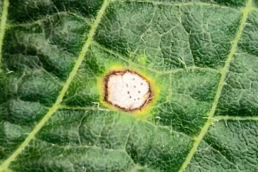
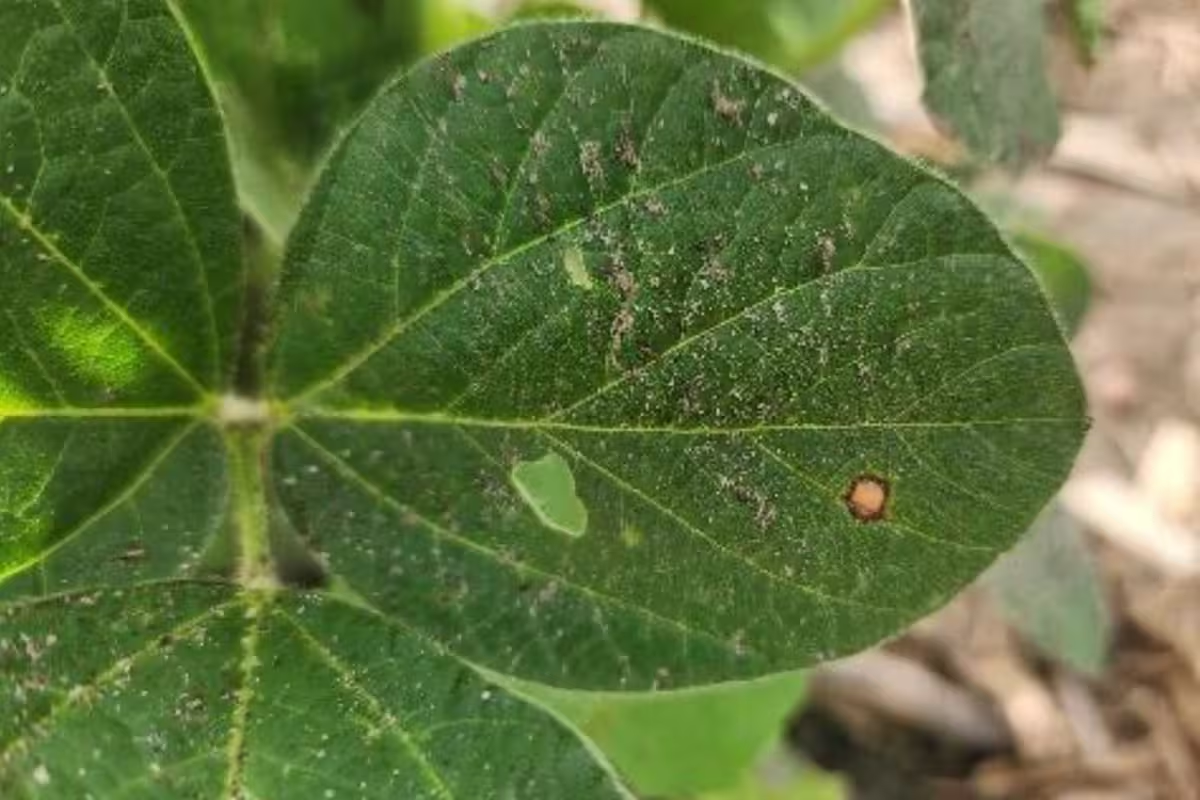
- Recently an unknown species of Diaporthe was putatively identified in collaboration with Dr. Mueller's lab at Iowa State University. This species is presenting leaf damage that appears similar to frogeye leafspot. We will continue investigating this unusual presentation in collaboration with Dr. Mueller and other extension specialists.
These pathogens are common across U.S. soybean acres and thrive in regions with warm, wet weather during the vegetative and early reproductive stages through harvest.
Disease Cycle
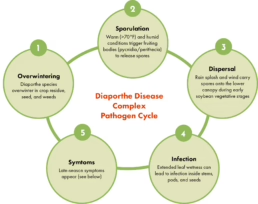
The Diaporthe complex can survive as dormant fungal structures in infested soybean residue and infected seeds. Other broadleaf hosts, such as velvetleaf and nodding spurge, can also harbor the pathogens.
When weather turns warm (>70°F) and wet creating high humidity, the pycnidia/perithecia on the residue release large amounts of fungal spores. Splashing water droplets from rain and wind spread the spores onto the lower canopy. These spores generally don’t travel far, localizing infections to areas that have high residue or specific splash events.
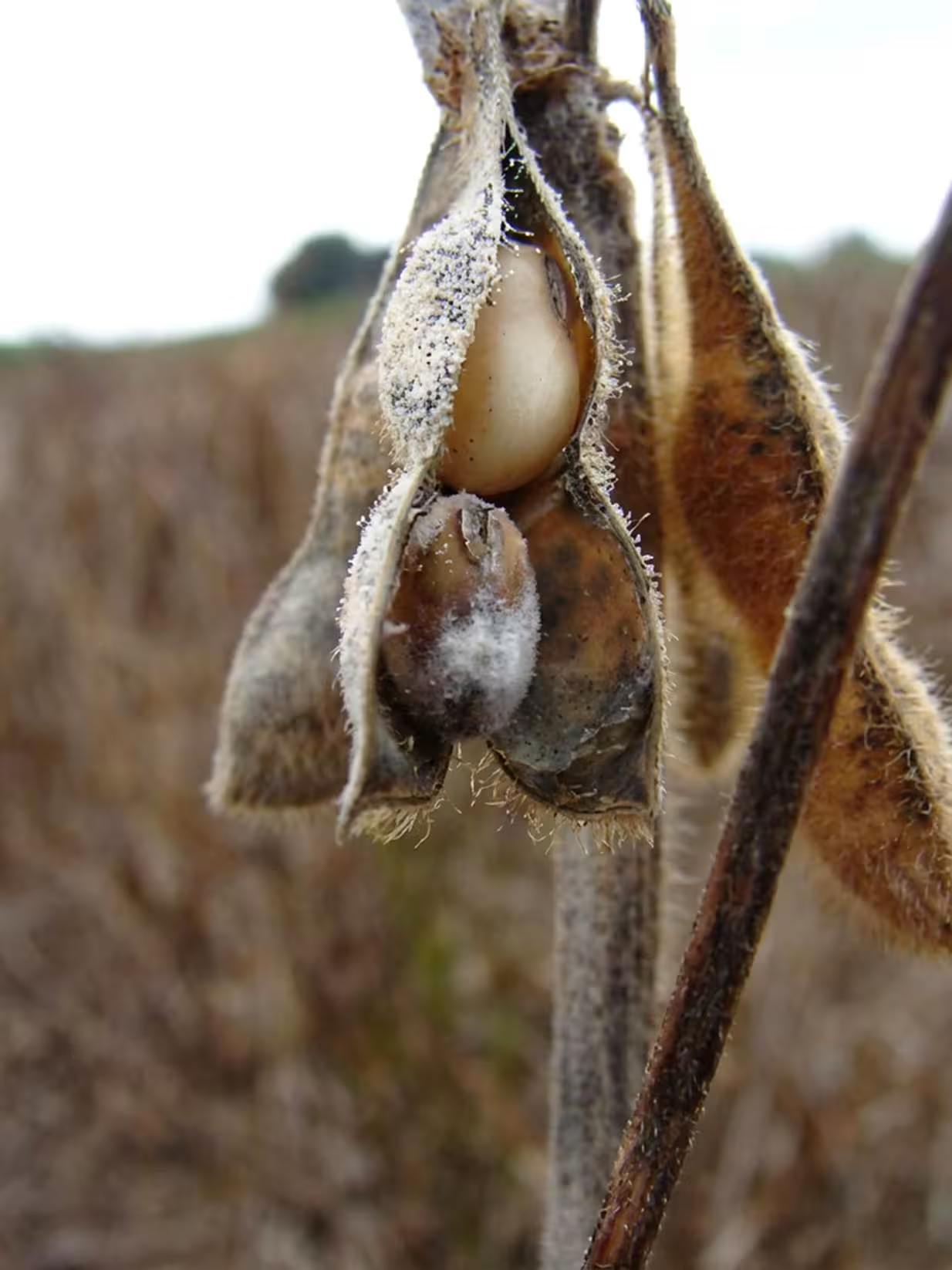
Once spores enter the plant, the pathogen can either remain latent or trigger an active infection. Symptoms will depend on the specific Diaporthe pathogen, and include sunken dark lesions (stem canker), linear rows of black specks (pod and stem blight), shriveled, chalky seed (seed decay), or leaf symptoms that are easily confused with frogeye leaf spot. Diaporthe complex can destroy stem tissues, girdle the stem and cut off water and nutrient flow.
Signs and Symptoms
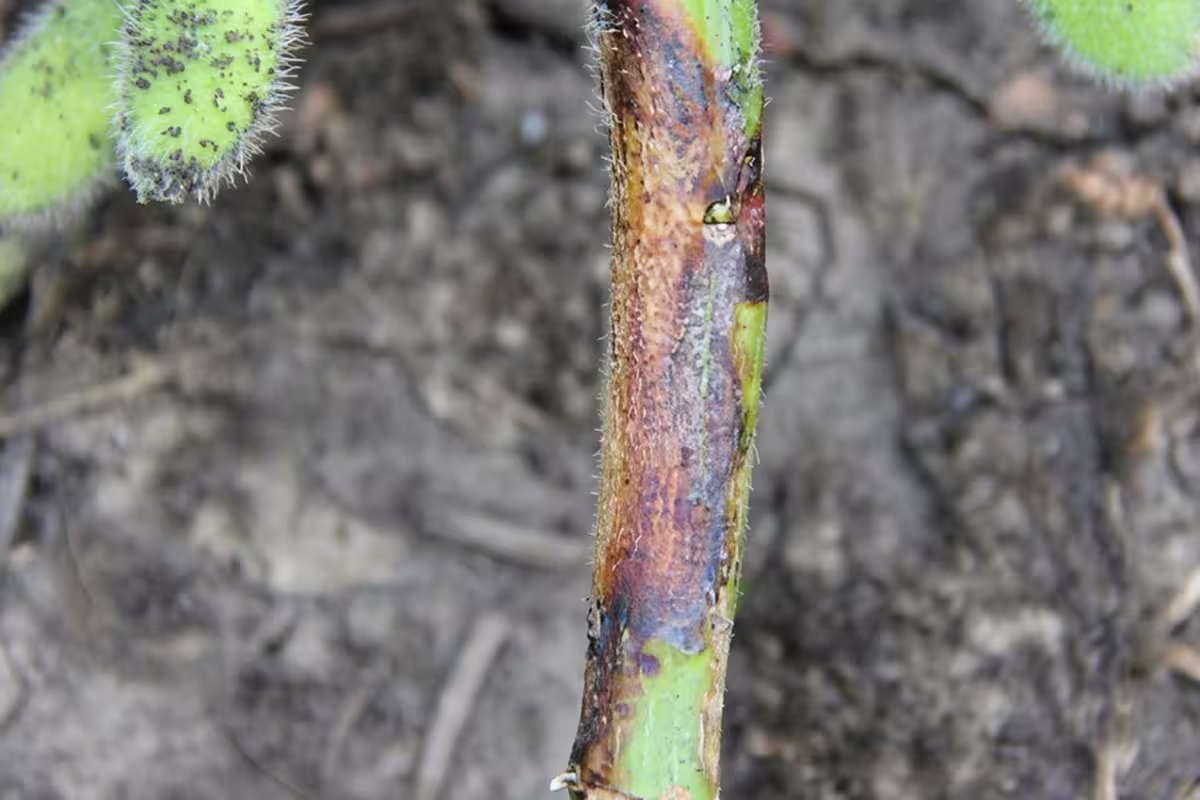
Stem canker: Typically characterized by light to dark reddish-brown, slightly sunken lesions on lower stem nodes. D. caulivora can cause a single canker to elongate and girdle the stem, killing the plant while the interior taproot remains healthy. Typically characterized by light to dark reddish-brown, slightly sunken lesions on lower stem nodes. D. caulivora can cause a single canker to elongate and girdle the stem, killing the plant while the interior taproot remains healthy.
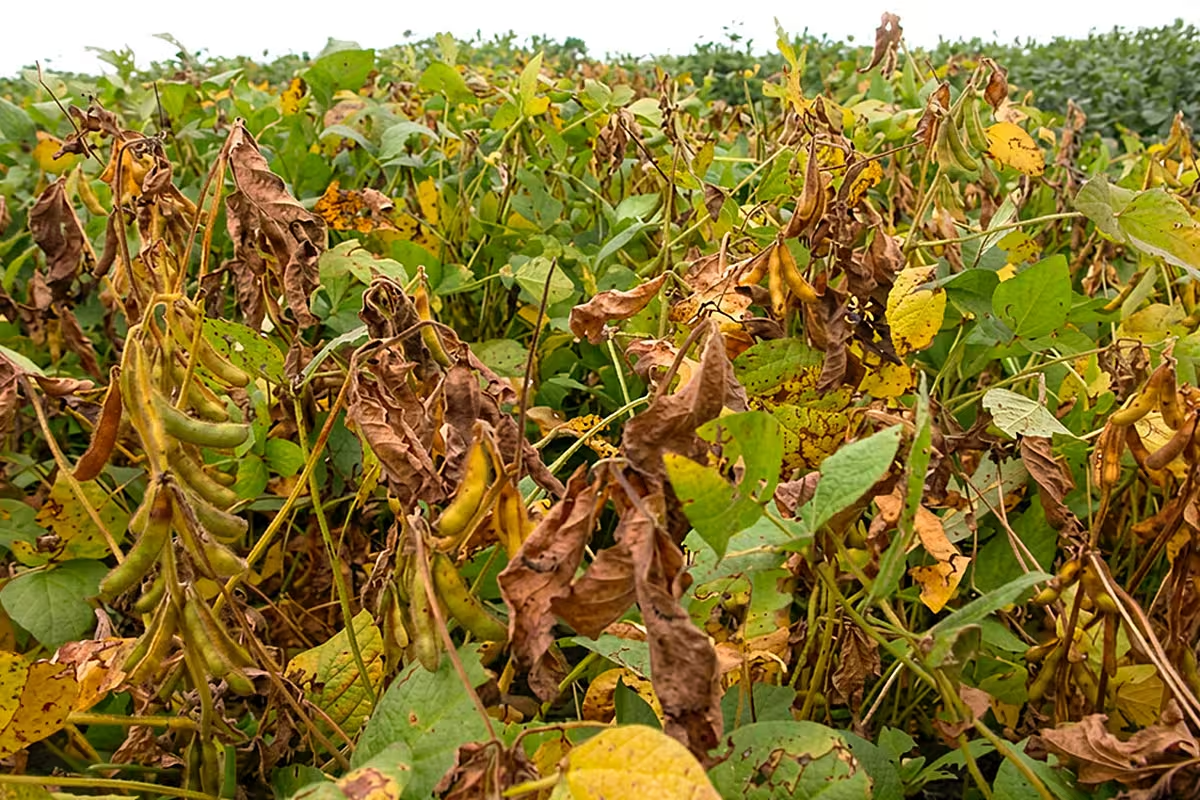
Pod and Stem Blight: Infected pods turn light brown. Under warm, wet conditions, the fungus spreads and produces linear rows of small black specks (pycnidia) along dead stem areas. D. longicolla may also produce black zone lines on lower stems.
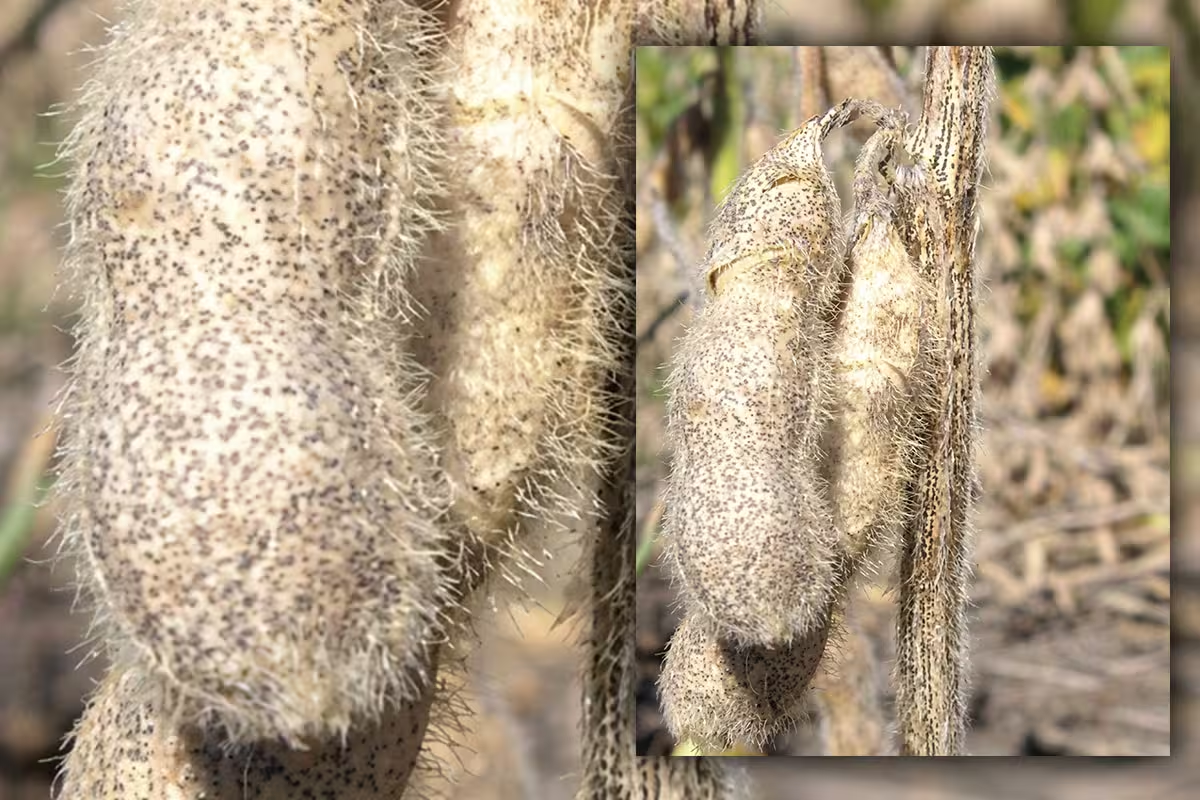

Diaporthe seed blight: Primarily caused by D. longicolla, infected seeds may look completely healthy, or become shriveled, cracked. Heavily infected seeds may be covered in a distinctive white, chalky, moldy layer. This leads to poor germination, seed dockage, or reduced crop grade.
Unknown Diaporthe symptom: Plants exhibit a circular lesion with a necrotic center that looks very similar to frogeye leafspot. Dr. Mueller’s lab at Iowa State University has recently putatively identified this as an unknown species of Diaporthe.
Note, alternating wet and dry conditions specifically drive pod and seed infections later in the season. Delayed harvests during wet autumns spike the risk of seed decay.
Impact
Risk from one or more species of Diaporthe is highest in fields with no-till and continuous soybean rotations that have a history of these pathogens. Broadleaf weeds can also host the pathogens.
Per the most recent national disease loss survey, Diaporthe was estimated to reduce U.S. soybean production by at least 796K bushels in 2025 (for losses attributed to seed decay alone), or over $8.0M in farm-gate value lost (based on the USDA’s 2024/25 marketing year average price).
Diaporthe complex symptoms can vary greatly, leading to notable economic losses by reducing plant stand, stem breakage (lodging), premature death and severe seed quality dockage.
Yield loss projections:
- Early vegetative infection + severe stem canker + warm, wet weather
- Up to ~50% yield loss with premature plant death, reduced seed count, and smaller seed size
- Late infection (during reproductive stages) or low severity
- Minimal yield loss (seed decay or diminished seed quality can still occur with late wet weather)
Managing Diaporthe
To combat Diaporthe complex, it’s critical to understand which species are impacting your fields. Each have different symptoms, so will need to be managed differently. Diaporthe complex can be easily confused with other foliar disease or injury. Knowing the difference will help you apply the best management strategy.
Before planting: Reduce your risk
Identify areas that will be at highest risk for the upcoming season, including fields with previous soybean crops that were flagged for Diaporthe pressure. Manage broadleaf weeds to eliminate alternate pathogen hosts. If possible, select varieties with higher tolerance to stem canker and plant high-quality, pathogen-free seed to reduce the risk of introducing Diaporthe into clean fields. If a field has had a previous severe infection of Diaporthe within the past year, consider rotating to a non-host crop like corn or wheat.
Late vegetative through early reproductive: Monitor conditions
Monitor for warm, humid conditions and extended leaf moisture early in the season, paying particular attention to areas with active rain splash. Field history, local weather forecasts (72–86°F with wet conditions), and leaf wetness duration (24–96 hours following rainfall) may signal increased risk for Diaporthe.
CropVoice is one tool that can help to keep tabs on Diaporthe pressure. Weekly scouting reports from CropVoice combine daily monitoring of InnerSoy™ (soybean plants engineered to signal when infected by fungus like Diaporthe) with advanced models to forecast overall disease risk in your fields.
Late reproductive (R4–R8): Track late-season infection
Continue to scout lower stems for reddish-brown cankers or linear rows of black pycnidia. To differentiate stem canker from white mold or stem rot, check for a healthy taproot and look for dark sunken lesions rather than the white fluffy mycelium or sclerotia commonly found with white mold. Make note of any areas impacted by Diaporthe and the specific symptoms you see.
To prevent severe seed decay and grade reductions, harvest fields with pod and seed infection as early as possible, particularly during wet harvest seasons.
If you’d like to see how CropVoice can help your farm take control of disease, call (877) 418-2062 or send us a note at cropvoice@innerplant.com.
If you’d like to see how CropVoice can help your farm take control of disease, call (877) 418-2062 or send us a note at cropvoice@innerplant.com.