

Welcome to CropVoice University
The information on this page is gathered from public sources and informed by InnerPlant’s data and experts to create a one-stop, authoritative source on crop disease.
Sudden Death Syndrome
Sudden Death Syndrome (SDS), caused by the soil-borne fungus Fusarium virguliforme, is a significant threat to soybean production across the United States. The pathogen impacts root health and can lead to severe defoliation and significant yield loss. While SDS is widespread, risk of severe yield impact is highest in compacted fields with disease history, heavy residue, poor drainage, and high populations of Soybean Cyst Nematode (SCN).
Disease Cycle
- Fusarium virguliforme overwinters as chlamydospores in root debris, soil and crop residue.
- Chlamydospores germinate under cool, wet soil conditions early in the season, infecting soybean roots shortly after planting.
- The fungus colonizes the roots, limiting root development, and produces a phytotoxin that moves up the plant xylem.
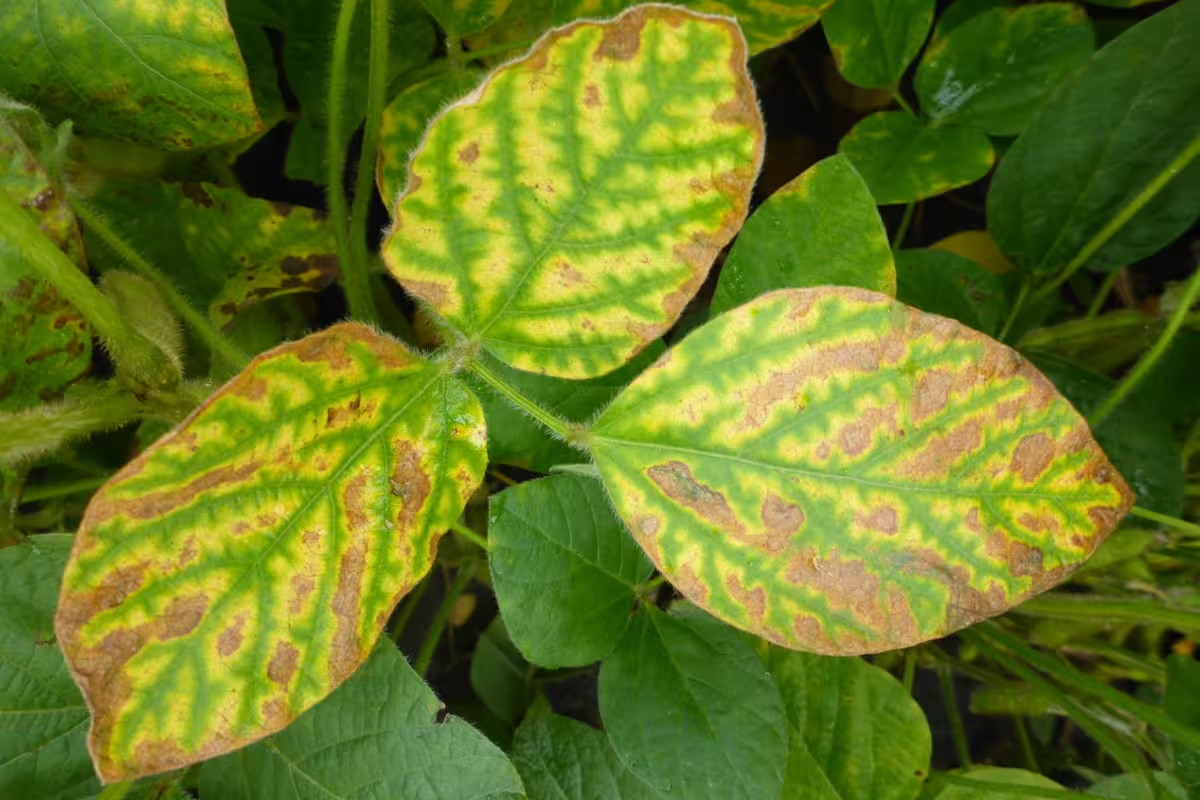
- Phytotoxin causes interveinal chlorosis and necrosis in leaves, with symptoms first appearing after flowering.
- Premature defoliation occurs, leaving only green petioles attached to the stem.
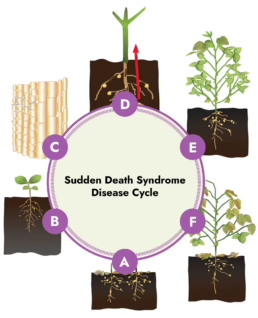
Fusarium virguliforme overwinters in infected crop and root residue. Early in the growing season, when the crop is exposed to wet soil conditions and cool temperatures (mid-60s℉), residual fungal spores, or chlamydospores, can infect and colonize soybean roots. Infection can begin as early as germination or just after crop emergence.
In addition to attacking the root system, the fungus produces a potent phytotoxin that is transported from the roots up the xylem to the leaves. Initial leaf symptoms appear as yellow spots between the major leaf veins (interveinal chlorosis), while the veins remain green.
High soil moisture, from rain or irrigation, and warm temperatures during the reproductive stages accelerate the production and movement of the phytotoxins, increasing symptom severity.
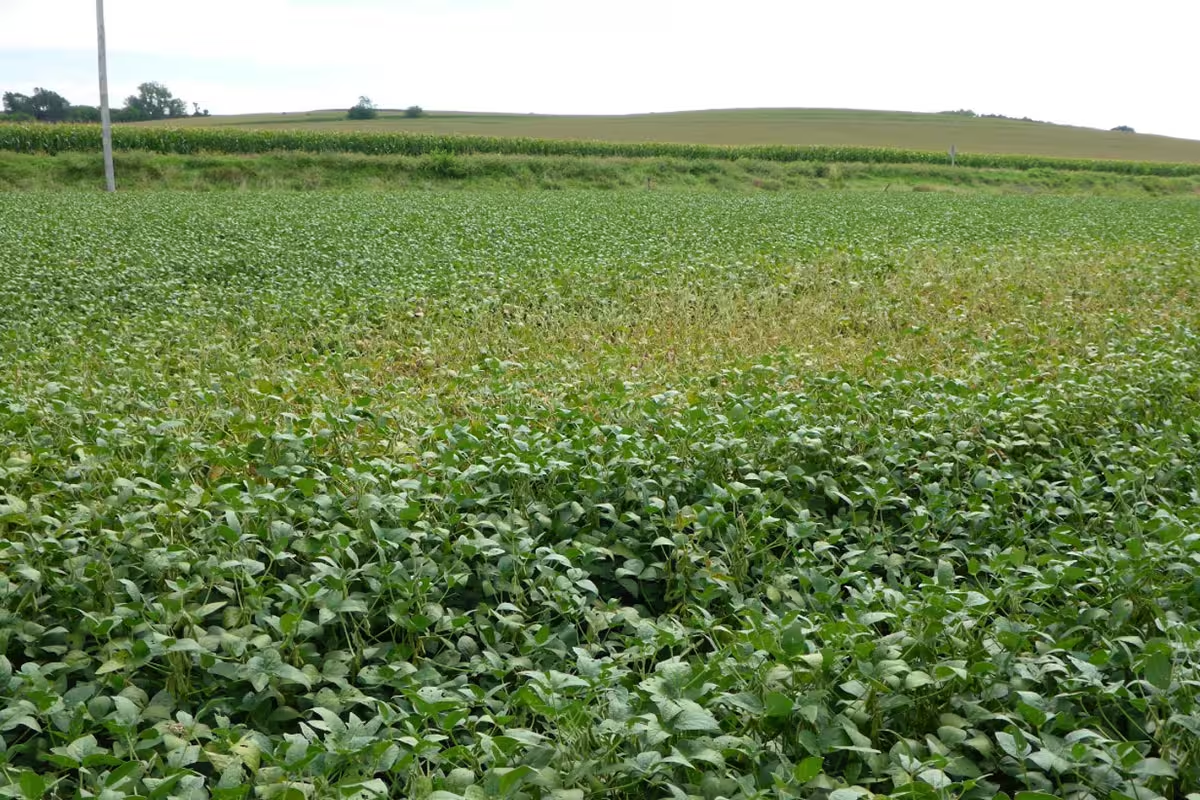
Tissue between the veins becomes brown and necrotic, causing the leaf to curl and drop prematurely. Leaf petioles remain attached to the stem. Hot, dry conditions can delay or stop SDS symptom development.
Defoliation reduces the plant’s ability to photosynthesize during the critical pod-fill period, which can cause shriveled and small seeds, and significant yield reduction.
Impact
SDS is consistently one of the most economically devastating soybean diseases in North America. In 2025, SDS led to an estimated yield loss of 49 million bushels, costing U.S. farmers over $512M (based on the USDA’s 2025/26 marketing year average price). Its widespread occurrence and ability to cause rapid, severe defoliation during the critical pod-filling stages result in significant yield loss annually.
The yield impact of SDS is directly related to the timing and severity of foliar symptom development, particularly how early the plant loses its ability to fill pods.
Yield loss projections:
- Early onset of severe foliar symptoms (R3-R4) ➜ Significant yield loss and shriveled seeds
- Late season onset (R6) or low severity ➜ Minimal yield loss
Managing Sudden Death Syndrome
The best way to combat SDS is an integrated management approach that focuses on reducing early-season root infection and mitigating secondary stresses like SCN.
Before planting: Reduce your risk
If you have a field history of SDS, avoid or address high-risk field areas that are low, compacted and have poor drainage. Work with your seed dealer to select soybean varieties that have genetic resistance to SDS, particularly for high-risk fields. While SDS persists through corn rotations, crop rotation to reduce SCN can help as SCN potentially increases SDS severity.
Fungicidal seed treatments can help reduce early-season root infection, and are most effective when combined with resistant varieties, improved drainage and reduced compaction.
Note, early planting can put soybeans at higher risk of SDS as infection typically occurs when soybeans are exposed to cool, moist soil conditions early in the season. Prioritize planting fields with a history of severe SDS later in the planting season for that reason.
Early Reproductive (R1-R5): Monitor fields
Scout your fields for the characteristic interveinal yellow spots in the foliage. Once these symptoms appear, the fungus has already infected the plant roots and released the phytotoxins, making fungicides applied at this stage ineffective against SDS. Disease severity can worsen if wet conditions persist.
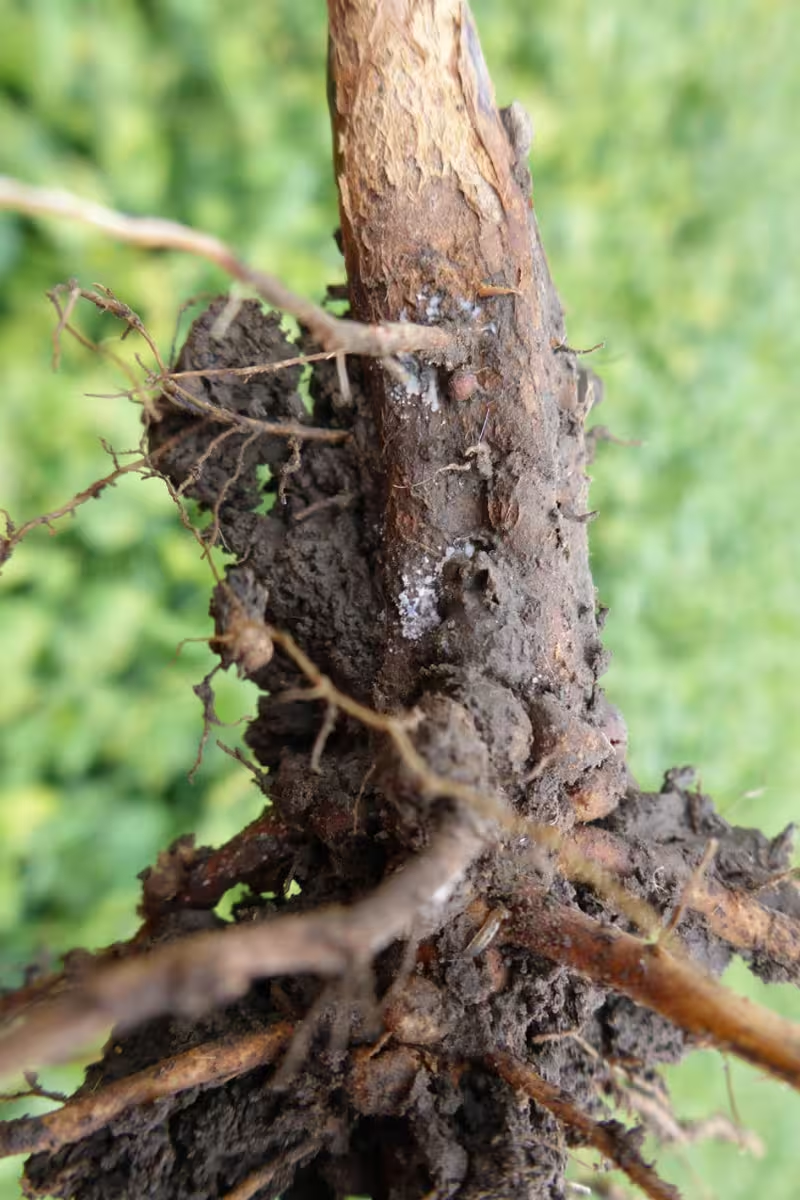
Accurate diagnosis is challenging, as SDS foliar symptoms are similar to other diseases. To verify SDS, inspect both the roots and stems. Split open a root or base of the stem – the disease causes a distinct grayish-brown discoloration of the lower stem and taproot’s cortical tissue, while the center pith remains white. In very moist conditions, the base of the stem may also have bluish-white mold growth.
Late Reproductive (R6-R8): Track late-season infection
Monitor fields for severe defoliation and the presence of petioles still attached to the stem. Note any fields or varieties that show severe symptoms for future management decisions.
If you’d like to see how CropVoice can help your farm take control of disease, call (877) 418-2062 or send us a note at cropvoice@innerplant.com.
If you’d like to see how CropVoice can help your farm take control of disease, call (877) 418-2062 or send us a note at cropvoice@innerplant.com.