

End of Season Report
for Central and Eastern Illinois
Disease detected in season, but below threshold to take action
The CropVoice network actively monitored fields every day this season. Disease Alerts were issued in Nebraska, and farmers were successfully able to treat fields weeks before white mold symptoms became visible. No Disease Alerts were called in Central or Eastern Illinois, as disease thresholds and impacts did not warrant action.

1. El Paso, IL
- Lack of early-season moisture
- Fungal symptoms were very low
- Small amount of Cercospera leaf blight at end of season
2. Tremont, IL
- Low levels of Cercospera leaf blight and downy mildew starting mid-July
- Sudden Death Syndrome detected in plot and surrounding area
- Frogeye leaf spot visible on <1% of leaves
3. Stanford, IL
- Sudden Death Syndrome detected in plot and surrounding area
- Small amount of Cercospera leaf blight, increasing late in season
- Frogeye leaf spot visible on <1% of leaves by mid-August
4. Chenoa, IL
- Drought stress June through July
- Small amount of Cercospera leaf blight
- Few frogeye leaf spot lesions at end of season (<1% of leaves)
5. Heyworth, IL
- Sudden Death Syndrome symptoms visible starting July 29
- Frogeye leaf spot visible on <1% of leaves
- Small amount of Cercospera leaf blight
- Japanese beetle feeding starting early July
6. Tolono, IL
- Downy mildew
- Japanese beetles reported with 15% defoliation
- Some grasshopper feeding
– Photo from plots –

– Disease –
Frogeye Leaf Spot
– Detection Status –
<1% leaves with lesions
– Alert Impact –
Minimal incidence did not trigger Disease Alert this season. Watch closely for 2026 season.
– Photo from plots –
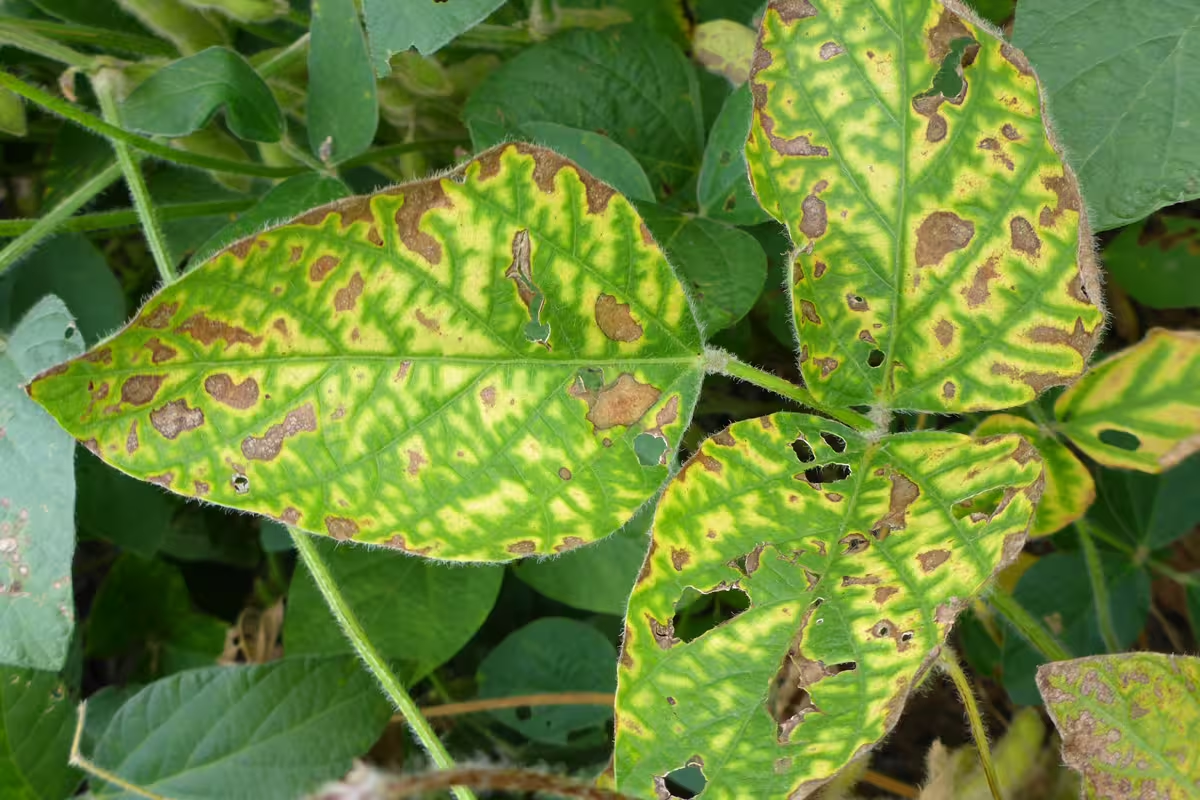
– Disease –
Sudden Death Syndrome
– Detection Status –
Visible in some plots from mid-July
– Alert Impact –
Low incidence and not treatable in season – no Disease Alert triggered
– Photo from plots –

– Disease –
Downy Mildew
– Detection Status –
Low levels present from mid-July
– Alert Impact –
Minimal yield impact and not controlled by commonly used fungicides. Did not trigger Disease Alert
– Photo from plots –

– Disease –
Cercospera Leaf Blight
– Detection Status –
Low levels detected from July
– Alert Impact –
Minimal yield impact; did not trigger Disease Alert
– Photo from plots –

– Disease –
Bacterial Blight
– Detection Status –
Low levels detected from July
– Alert Impact –
Minimal yield impact; did not trigger Disease Alert
How disease was detected
CropVoice is powered by a network of InnerSoy™ plants genetically engineered to fluoresce when infected by above-ground fungal pathogens, giving early warning of disease. That information is augmented with laboratory analysis, on-the-ground scouting, local agronomic expertise, weather data, and advanced modeling to confirm disease in the network. Disease Alerts are sent when disease is confirmed to help farmers take the guesswork out of their fungicide decision.
Illinois Year-End Disease Rating
Low disease severity detected throughout the season.
Year-end disease ratings confirmed trace to very low levels of disease infection across the network.

Central Illinois Tissue Results
While many soybean pathogens are present, they need a susceptible host and conducive weather to complete the “disease triangle” and actually cause disease in the field. Tissue samples showed relatively low amounts of pathogens in the area, with Cercospora leaf blight and bacterial blight growing more common later in the season


Without a Disease Alert, applying fungicide may not have been ROI positive this year. We would love to hear your experiences if you applied or did not apply fungicide this year.
Above ground disease
Frogeye Leaf Spot
Frogeye leaf spot inoculum is present in soybean debris and will overwinter.
Monitoring for infection will be key in 2026 to determine infection level.
- The fungus that causes frogeye leaf spot, Cercospora sojina, can overwinter more than one season
Frogeye Leaf Spot
Continue to monitor for White Mold. This disease was not common in the area in 2025.
Below ground disease
Sudden Death Syndrome (SDS)
Sudden Death Syndrome continues to be the key soybean pathogen to manage
- Consider adding a Soybean Cyst Nematode / Sudden Death Syndrome seed treatment
- If you have fields with a history of SDS, plant those fields last. Susceptibility for SDS is higher with earlier planted soybeans.
Red Crown Rot
Continue to monitor for Red Crown Rot. This disease was not common in the area in 2025.
Frogeye Leaf Spot
Disease pressure varies each year.
- Enrolling your crop in CropVoice next year ensures that you will get Disease Alerts when there is actual infection in your area so you can make the best informed fungicide decision.
2026 CropVoice network coverage
