
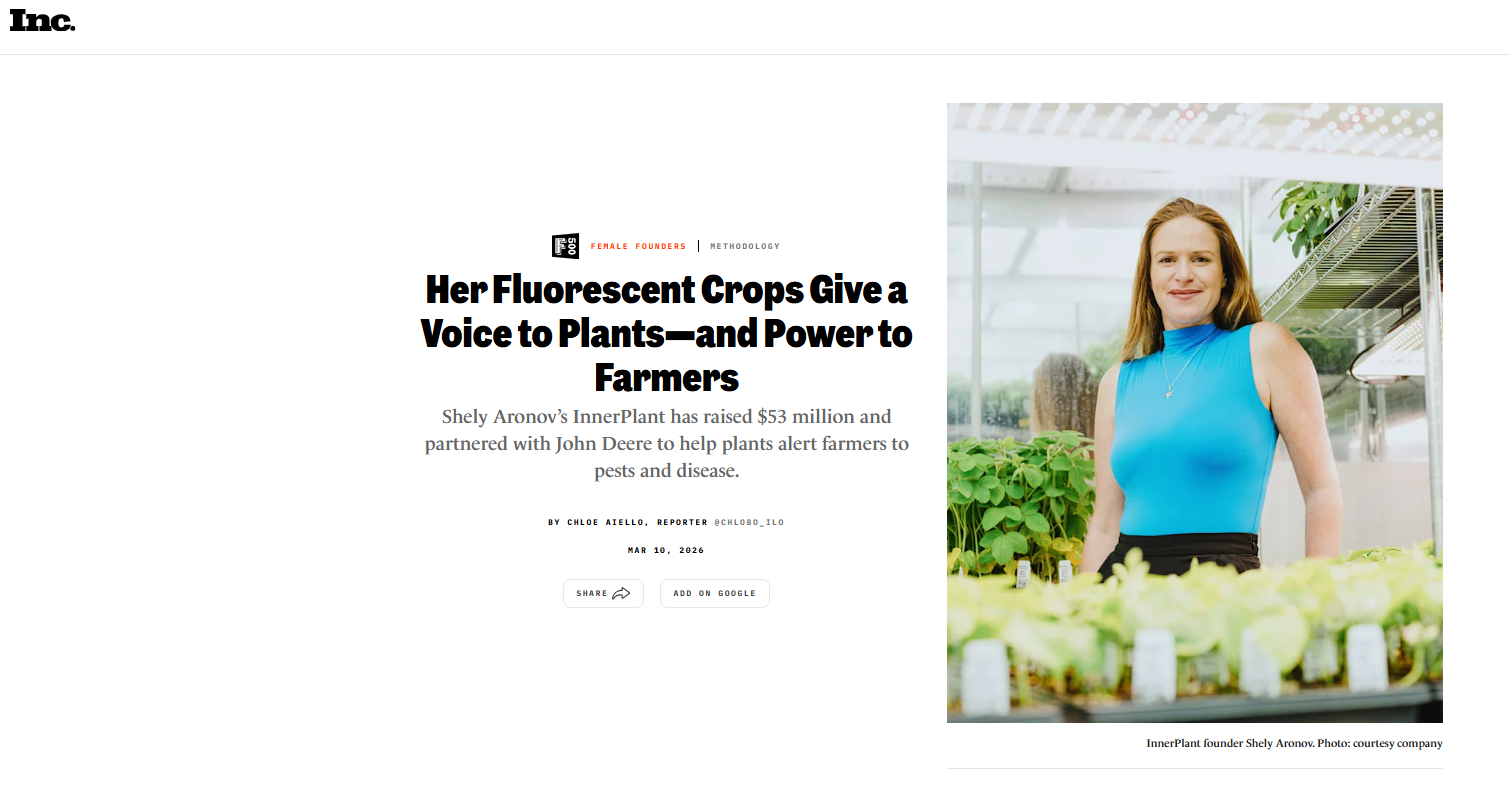
Read the full article from Inc here:
It’s the year 2030 in the middle of a field in Perry, Iowa. At 85 degrees, it’s unseasonably hot for early May. Already, there are soybeans breaking through the soil in farmland as far as the eye can see. The plants are maturing under the watchful gaze of an unseen satellite miles above the Earth. It has detected a problem in the field. A farmer dispatches a drone, which zooms over to inspect a plant that looks just like any other. The drone knows otherwise, and emits a stream of fungicide, successfully staving off an infection that could have devastated acres of crops.
In actuality, it’s 2025 and about as perfect a day as you can expect for August in Iowa. There are roughly 50 people gathered in a shed, where InnerPlant co-founder and CEO Shely Aronov has just finished giving a presentation for one of the company’s many Field Days, when farmers and industry insiders gather to showcase new technologies, machinery, research, and growing techniques. This one’s focus is a futuristic depiction of what might be possible in five years if her company, Davis, California-based InnerPlant, has anything to say about it.
“Farmers obviously want to do the right thing for their plants. They want to treat only diseased plants, and we want them to use the least amount of products in their fields,” Aronov tells Inc. of her broader vision for InnerPlant. “It’s better for the environment. And really, there are no losers in this—except if you sell chemicals.”
Story continues here: