
Video: Croptastic S4, Episode 48: Plant Genetic Transformation
This episode pulls the curtain back on our Plant Genetics Transformation Team. Ramtin Ravanfar and Sharon Radke give us a look at the transformation process and what makes the InnerPlant team so successful.
https://youtu.be/UwhL0YWYK-0?si=K7sX49u1c5a05Ts1

Video: Croptastic S4, Episode 47: Michael Doane
This episode features Michael Doane, Global Managing Director of Food & Freshwater Systems at The Nature Conservancy. Michael joins Shely to talk about The Nature Conservancy's work and how sustainability might fit into the future of agriculture.
https://youtu.be/Yq811wDUdQg?si=CuBhzoULwGaiRn7r
Video: Croptastic S4, Episode 46: Trey Malone
Croptastic returns for its fourth season with video! Join the InnerPlant team for exclusive peaks behind the scenes and special guests who join us to discuss the future of agriculture. This episode features Trey Malone, the Purdue University College of Agriculture Department of Agricultural Economics' Boehlije Chair in Managerial Economics for Agribusiness. Trey chats with Shely about the work he does to better understand the business of agriculture and shares his thoughts on innovation in the industry. Below are links to the studies that Trey references during the episode.
https://youtu.be/ZIcJguwWZvE?si=BUmeU3hd9B6j6yxu
Farm Foundation Report - https://www.farmfoundation.org/2024/0...
The supply chain regulations papers:
Staples, A.J., D. Chambers, & T. Malone. 2022. "How Many Regulations Does It Take to Get a Beer? The Geography of Beer Regulations." Regulation & Governance. 16(4): 1197-1210: http://doi.org/10.1111/rego.12403
Staples, A.J., D. Chambers, R.T. Melstrom & T. Malone. 2022. "Regulatory Restrictions Across U.S. Protein Supply Chains." Journal of Agricultural & Applied Economics. 54(1): 1-27: https://doi.org/10.1017/aae.2021.28
The paper that includes the ICPC Framework:
Malone, T., J. Monahan, K. Nicpon, K.A. Schaefer, & M. Cary. 2022. "On the Creation of Fast-Responding Extension and Teaching Content in a New Media Environment." Applied Economics & Teaching Resources. 4(2): 1-13: https://www.aaea.org/UserFiles/file/A...
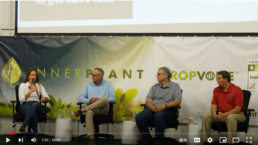
Video: Croptastic S4, Ep 45 - InnerPlant's First Field Day
InnerPlant recently held its first Field Day in partnership with GROWMARK FS and hosted at the West Central FS Innovation Campus in Galesburg, IL. The day featured live demonstrations of InnerSoy plants signaling in the field, as well as panel discussions about how InnerPlant's technology is helping companies like John Deere and Syngenta build the future of agriculture. This episode features a quick look at the Field Day activities along with the full keynote panel.
https://youtu.be/xxq13gZ2OXE?si=A2f80L_QO8gweRVg

Video: Croptastic S3 Ep 44 Jon Entine
Croptastic returns for its third season with video! Join the InnerPlant team for exclusive peaks behind the scenes and special guests who join us to discuss the future of agriculture.
This episode features Jon Entime, founder and Executive Director of the Genetic Literacy Project, who joins Shely to talk about genetically engineered crops and how the public perceives them.
https://youtu.be/Zcauf39mkpQ
InnerPlant Launches CropVoice™ Insights Platform that “Listens” to Plants Engineered to Signal Fungal Stress
DAVIS, Calif. (Aug. 15, 2024) – InnerPlant, the seed technology company enabling the earliest detection of stress in crops to make farming more efficient and sustainable, today announces the launch of CropVoice™. The first-of-its-kind insights platform is powered by a network of plots featuring InnerSoy™ - a soybean engineered to signal when under attack from fungus - and gives farmers and agronomists access to stress signals directly from plants, unlocking crop protection strategies with the highest return on investment.
CropVoice™ is rolling out for the 2025 growing season in selected areas of Illinois. Subscribers will receive spray recommendations in response to fungal pressure in a particular coverage area based on signals from InnerSoy™ plants planted in sentinel fields.
“Environmental and pathogenic data are important detection signals but fail to provide proof that plants are actually infected,” explains Randy Shultz, InnerPlant’s Chief Product Officer. “With millions of sensors deployed, InnerPlant is the ONLY company that completes the ‘disease triangle’ by using the earliest physiological responses directly from plants to confirm infection – as it’s happening.”
CropVoice™ signals are tied to the plants’ genetic response to stress, which are detectable four to six weeks before stress is detectable by other scouting methods. This early warning lets farmers take action to spray with confidence and protect yields as shown in the image below.
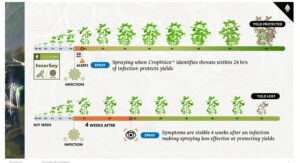
Benefits from the groundbreaking C ropVoice™ network include:
- Earliest Warning - Signals are tied to plants’ physiological responses - rather than gathered externally by synthetic sensors - and alert farmers to stress weeks before detection is possible by other scouting methods.
- Most Sensors - Each plant in a sentinel plot functions as a biological sensor giving millions of points of data at a much lower cost to deploy.
- Straightforward Recommendations - Data from InnerSoy™ fungal sensors is combined with other data sources and processed by powerful algorithms to give growers and agronomists simple “spray/don’t spray” recommendations via the farm management software they already use.
InnerPlant’s CropVoice™ powered by InnerSoy™ +fungus is available for the 2025 growing season in selected areas of Illinois. Those interested in getting more information about network coverage areas or learning how to enroll should visit innerplant.com/cropvoice or email cropvoice@innerplant.com.
About InnerPlant
InnerPlant is a seed technology company that enables the earliest detection of pathogens and other stresses in key crops to make farming universally more efficient and sustainable. The company was founded in 2018 by Shely Aronov and Rod Kumimoto. InnerPlant was recently named one of the World’s Most Innovative Companies in agriculture by Fast Company and was recognized with a Special Mention TIME Best Inventions. For more information visit: innerplant.com.
Media Contact
Sean Yokomizo
Communications/Media Relations
sean.yokomizo@innerplant.com
925.878.1200
###
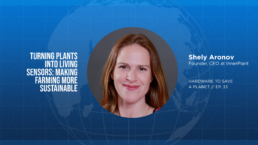
A Triple Win of Sustainability and Agricultural Efficiency - Podcast Appearance
(This post is related to Shely's appearance on the Hardware to Save a Planet podcast)
As the world’s population continues to grow at an unprecedented rate, food production and distribution have become major global concerns. Climate change has also become a critical concern for the future of agriculture and food security. Fortunately, innovative technology is transforming agriculture and addressing climate change, and the results are promising. Innovative technology has transformed agriculture in many ways, including precision agriculture, advanced materials, and digital agriculture.
Agriculture is responsible for around 25% of global greenhouse gas emissions. Inefficiencies in agriculture also have economic and environmental impacts downstream. As much as 30% of pesticides are wasted annually, costing an extra 250 billion and impacting air, soil, and water quality. Despite that, we still lose as much as 40% of our crop yields yearly to pathogens. Shelly and Interplant are tackling those inefficiencies with a very cool approach. They're turning plants into living sensors to communicate their specific needs.
Precision agriculture involves using technology to optimize crop yields and reduce waste while promoting biodiversity and sustainability. Digital agriculture involves using data and technology to optimize every aspect of the farming process, from planting to harvesting.
Shely Aronov is the Founder and CEO of InnerPlan, and this Agritech company turns crops into living sensors for a triple win of improving biodiversity, impacting climate change, and improving agricultural yields. Shely was recently on the Hardware to Save a Planet podcast, where she covered multiple touchpoints around how addressing agricultural inefficiencies also impacts climate change.
Listen to the podcast to learn how satellite imagery, hyperspectral cameras, and collecting genomic data can help detect plant health and reduce chemical usage for a cleaner and greener environment. Learn how InnerPlant is overcoming the challenge of balancing agricultural yield with social impact and environmental sustainability.
Here are some excerpts from the episode, be sure to listen to the podcast via the link at the end of this blog.
An Overview of InnerPlant’s Technology and Process
Plants are susceptible to environmental changes and have a highly evolved reaction. For instance, a lack of Nitrogen in the soil causes the roots to go deeper. These changes are triggered by a change in the plant's DNA. InnerPlant has developed a technology that adds a line of code to the plant's DNA. Every time an environmental change stresses the plant, the plant produces a protein that creates an optical fluorescent signal that can be monitored remotely, even from satellites in space. Also, when the plant produces its seeds, the seeds’ DNA will carry that code line, making the change self-propagating.
“There are two challenges to developing this technology. One is you have to make the plants create a signal, and the other is you have to collect the signal, and both are equally challenging”.
What is the Environmental and Agricultural Impact of the Technology?
Based on statistics, 30-50% of fertilizer is over-applied, while 50% of pesticides are misapplied, meaning they’re applied at the wrong time. The combined impact cuts the agricultural yield by up to 40%. It also affects biodiversity as the over-application of fertilizers kills the soil's ability to sequester environmental carbon. By enabling the plants to define when they need fertilizers and pesticides, we’re protecting biodiversity, addressing climate change, and raising agricultural yields—a triple win.
An Under-the-Hood Look at How the Process Works
Shely explains the process using the example of the soybean seed. The seed carries a code to trigger anti-fungal fluorescence. If a fungus attacks the plant, satellites in space activate and capture the signal. The satellites can capture the signal at a one-acre-per-pixel resolution. The monitoring station then advises the farmer on the acre that needs attention. John Deere sprayers are retrofitted with sensors that can monitor the plants within that acre, emitting the signal and spraying only those plants.
“We're creating knowledge in our plants, and the right data will provide that knowledge, which removes the inefficiencies”.
The InnerPlant Business Model
InnerPlant is building an ecosystem of partners to deliver the solution to the farmers. The simplest and most scalable solution is to sell seeds that have the code embedded in them. The farmers can then work with the partners downstream, who would monitor the signals from the plants and update the farmers on the required follow-up actions. Initially, the company is selling the seeds, but once the ecosystem is in place and mature, they want to own and monetize the signals and the data.
“We will sell direct seeds in the early stages, but long-term, we don't want to be a seed company. We are not going to be in the tractor or satellite business. We are in the business of creating, analyzing, and monetizing the signals”.
A Peek at the Solution’s Hardware
As a first step, the fluorescence must be detected, and surface-based detection would require additional light sources and cameras. However, when detecting from space, the company used electrophysiology techniques to develop a sensor that could detect the fluorescence in sunlight. The cameras on the satellite are programmed with custom algorithms to detect the signals, which are then relayed to a ground station for evaluation and further action.
“The signals go away when the problem is resolved. A week later, we can collect satellite imagery and validate that the action produced the result, eliminating the disease”.
A Quick Word About Shely Aronov
Shely Aronov is an experienced entrepreneur who thrives on solving complex and meaningful problems. She believes no other industry is more critical to our society than agriculture. Shely’s mission at InnerPlant is to develop tools that will help feed the world sustainably while driving a positive environmental impact.
Shely and her team at InnerPlant are implementing a scalable and affordable solution that uses signals from plants to optimize the use of chemicals while increasing agricultural yields.
Join Us on Hardware to Save a Planet
The Hardware to Save a Planet podcast explores the technical innovations that give us hope in the fight against climate change. Each episode focuses on a specific climate challenge and explores an emerging physical technology solution, with the person bringing it into reality.
- To discover more about how precision and digital farming is yielding a triple win, tune in to the latest episode of Hardware to Save a Planet, brought to you by Synapse.
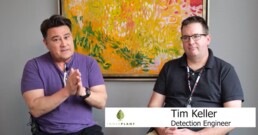
Video: Croptastic S3, Ep 43 Tim Keller
Croptastic returns for its third season with video! Join the InnerPlant team for exclusive peaks behind the scenes and special guests who join us to discuss the future of agriculture.
This episode features Tim Keller, InnerPlant's Detection Engineer, who shares a bit about his role and some of the projects he takes on to help develop and deploy our technology.
https://youtu.be/f2BLYkDb3nk
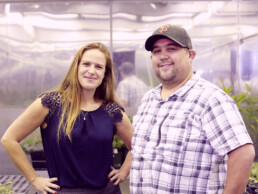
InnerPlant’s $30M Series B Led by Alliance of North American Farmers
The Series B Investment underscores farmer demand for innovative technology that gives the earliest possible warning of crop stress
DAVIS, Calif. (July 25, 2024) -- InnerPlant, the seed technology company enabling crops to signal as soon as they experience stress to make farming more efficient and sustainable, today announces a $30M Series B funding round led by an alliance of large North American farmers headed by Coutts Agro, an operator and agricultural investor. Joining the round is Systemiq Capital, as well as previous investors Deere & Company and Bison Ventures.
“We’re very proud that this round is being led by the people who best understand what’s needed on the farm and what innovation in agriculture actually looks like,” says Shely Aronov, CEO and co-founder of InnerPlant. “We’ve always put farmers at the center of everything we do and this investment validates that farmer-centric culture and our technology.”
InnerPlant genetically engineers plants to emit separate and distinct optical signals when the plants are under stress, such as when they lack nutrients or are under fungal pressure or attack from pests. The signals are detectable from as far away as space and show stress as much as three weeks before existing technologies giving farmers the earliest warning possible to optimize action and protect their crops.
InnerPlant’s first commercial product, InnerSoy - a soybean that signals fungal pressure - is currently piloting in Southern Illinois fields in partnership with GROWMARK. The program established plots of InnerSoy throughout the Midwest this spring with an expanded number of plots expected over the next three years. The plots provide county-level early warning of fungal infestation and will improve in resolution as the tech becomes available in every seed in subsequent years.
“Our Family and our Partners have been farming for several generations and this is the first time in decades that we’ve seen a technology that has the opportunity to increase agricultural GDP and not merely redistributing the value,” explains Matt Coutts, Chief Investment Officer of Coutts Agro and InnerPlant board member. “The ability of farmers to receive data about stress that’s tied directly to plant physiology fundamentally changes how farmers can manage crops, resulting in more durable profitability.”
The funding news comes on the heels of InnerPlant’s announcement alongside John Deere and Syngenta to develop a first-of-its-kind integrated precision platform to fight fungus in soybeans. The platform will link together plants that give off early and specific signals when under attack by fungus with optimized crop protection treatments delivered with See & Spray technology.
About InnerPlant
InnerPlant is a seed technology company that enables the earliest detection of pathogens and other stresses in key crops to make farming universally more efficient and sustainable. The company was founded in 2018 by Shely Aronov and Rod Kumimoto. InnerPlant was recently named one of the World’s Most Innovative Companies in agriculture by Fast Company and was recognized with a Special Mention TIME Best Inventions. For more information visit: innerplant.com.
About Coutts Agro
Coutts Agro is a privately owned investor and operator in the agricultural value chain, led by its farm in Saskatchewan where it grows lentils, canola and wheat at scale. For more information visit: https://www.linkedin.com/company/couttsagro
Media Contact
Sean Yokomizo
Communications/Media Relations
sean.yokomizo@innerplant.com
925.878.1200
###
Exclusive: InnerPlant bags $30m Series B led by its ‘ideal investors’: an alliance of North American farmers
(Full story at AgFunder)
- InnerPlant, which recodes plants’ DNA to improve distress signaling, has raised $30 million in Series B funding.
- An alliance of large North American growers, helmed by Canadian grain operator and ag investor Coutts Agro, led the round.
- Climate investor Systemiq Capital also participated alongside returning investors Deere & Company and Bison Ventures.
- Funding will support the rollout of InnerPlant’s insight platform for soybeans and accelerate the company’s work alongside its seed partners, among other things.

“We’ve always considered farmers our ideal investors’
A group of farmers banding together to lead a fundraising round is rarely seen in the agtech sector and certainly not at this size, which suggests substantial confidence in InnerPlant’s technology.
“We believe InnerPlant is a highly compelling investment, and our team had the idea it would be a powerful statement to do a farmer-led round to accelerate InnerPlant to fulfill their objectives,” Matt Coutts, CIO of Coutts Agro and InnerPlant board member tells AgFunderNews.
“Our network of like-minded friends who are also farmers and who understand the nature of agriculture and the capital markets made for a natural group to try [leading an investment] with. Many of them were aware of InnerPlant before and saw the value of investing on the financial merits, driven by the viewpoint that it is a technology that will deliver substantial value to farmers.”
(Story continues at AgFunder)