

Welcome to CropVoice University
The information on this page is gathered from public sources and informed by InnerPlant’s data and experts to create a one-stop, authoritative source on crop disease.
Frogeye Leaf Spot
Frogeye leaf spot, caused by the fungus Cercospora sojina, is a foliar soybean disease found across the United States and Eastern Canada. Because frogeye leaf spot is easily confused with other foliar diseases, proper scouting and diagnosis is critical. The disease thrives in warm, humid conditions with extended leaf wetness, either from frequent rainfall, overhead irrigation, or overcast conditions that prevent the canopy from drying
Disease Cycle
- Cercospora sojina pathogen survives in crop residue for 2 years or more
- Conidia spread to the canopy through rain droplets and wind
- Lesions appear and enlarge, which may lead to leaf blight and premature defoliation
- Stem and pod lesions may develop late in season
- Infected tissue results in crop residue with conidia
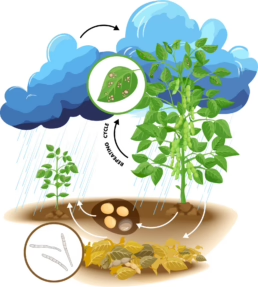
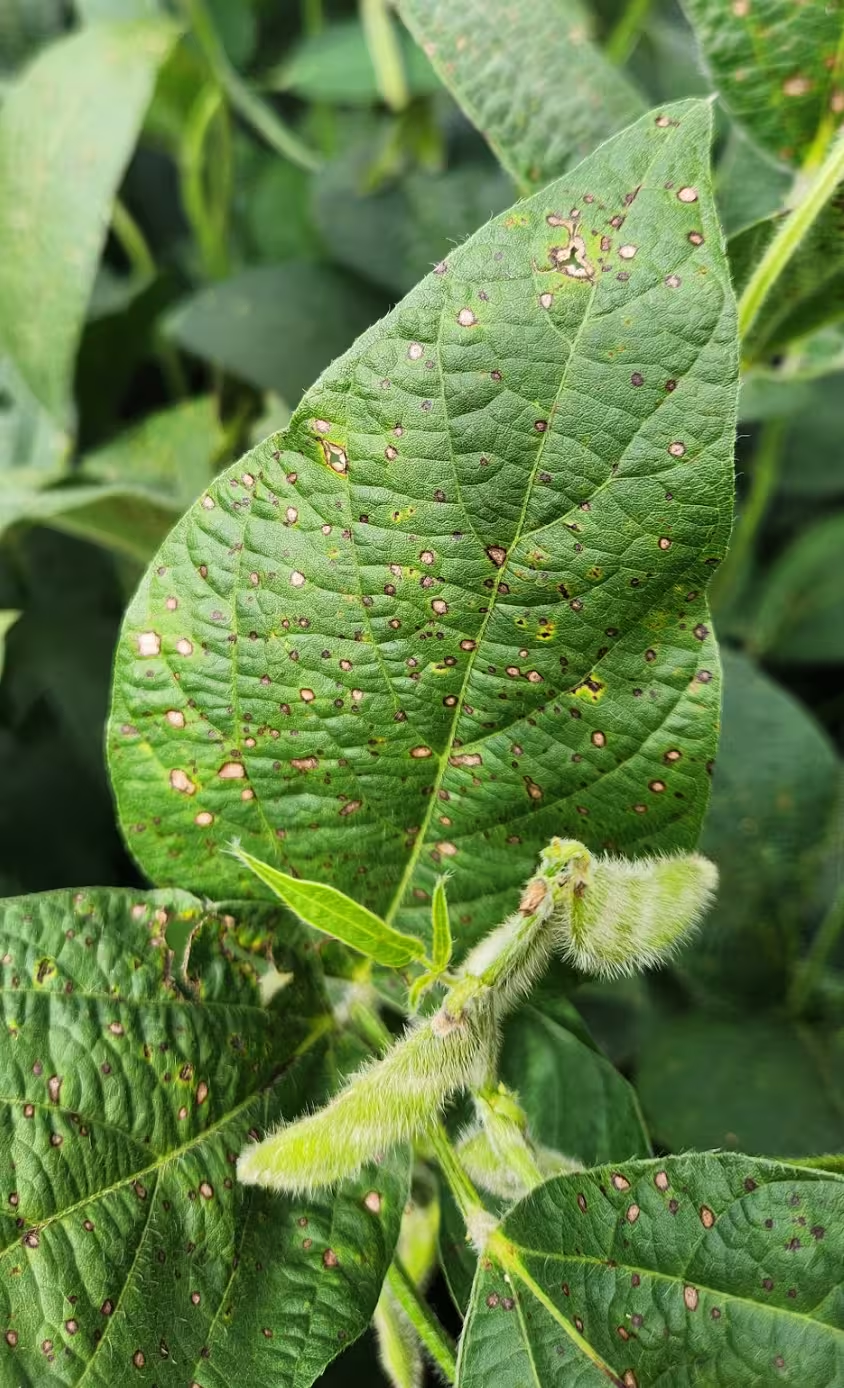
Frogeye leaf spot survives in the residue of previous soybean crops for two years or more. Splashing water droplets from rain and wind spread conidia, or fungal spores, up into the canopy. While frogeye leaf spot can infect at any soybean growth stage, young leaves are most susceptible and symptoms typically appear after flowering in the upper canopy.
Initial symptoms appear as small, dark spots that spread into lesions about a ¼-inch wide with gray-brown centers and a characteristic brownish-red margin (giving it the name “frogeye leaf spot”). Individual leaf spots can blend and appear as irregular blighting patterns. Later in the season, infection can develop on stems and pods, appearing as long, thin lesions on the stem and sunken, reddish brown lesions on the pod. Severe infection can lead to discolored and cracked seed.
New spores from infected plants can spread to healthy plants in the same field. The frogeye leaf spot cycle repeats multiple times throughout a single growing season, building up disease pressure and inoculum that will overwinter.
While infected seeds can also carry the pathogen, transmission through seed is not common.
Impact
Risk from frogeye leaf spot is highest in fields that have a history of frogeye leaf spot disease. More susceptible soybean varieties are at risk as infected residue can more easily build up to infect the following year’s crop.
Per the most recent national disease loss survey, frogeye leaf spot was estimated to reduce U.S. soybean production by 5.4M bushels in 2025, or roughly $56.9M in farm-gate value lost (based on the USDA’s 2025/26 marketing year average price).
Frogeye leaf spot’s effect on yield can vary greatly, depending on disease timing, varietal susceptibility to disease, and weather conditions during soybean reproductive stages:
- Early reproductive infection + severe disease + warm, humid weather ➜ up to ~35% yield loss with extensive leaf blighting
- Late infection (after R5.5) or low severity ➜ minimal yield loss
Managing Frogeye Leaf Spots
To combat frogeye leaf spot, combine long-term management approaches while addressing in-season when risk to yield is highest. Frogeye leaf spot can be easily confused with other foliar disease or injury. Knowing the difference will help you apply the best management strategy.
Before planting: Reduce your risk
Identify areas that will be at highest risk for the upcoming season by looking at fields with previous soybean crops that were flagged for significant frogeye leaf spot pressure. If possible, choose resistant soybean varieties, like those with the Rcs3 resistance gene. In order to reduce the risk of introducing frogeye leaf spot into new fields, select certified seed.
Late vegetative through early reproductive: Start monitoring conditions
Because frogeye leaf spot can infect at any growth stage, it’s important to keep an eye out for warm, humid conditions and extended leaf moisture early in the season.
CropVoice is one tool that can help to keep tabs on frogeye leaf spot pressure. Weekly scouting reports from CropVoice combine daily monitoring of InnerSoy™ (soybean plants engineered to signal when infected by fungus like frogeye leaf spot) with advanced models to forecast frogeye leaf spot disease risk in your fields. CropVoice will send you a Disease Alert when there are active frogeye leaf spot infections near your fields, often before you see symptoms, so you can take action when it is warranted.
Early reproductive (R1-R4): Actively monitor and manage your fields
Risk to yield peaks and severe outbreaks occur early in the reproduction stages.
Unfortunately, frogeye leaf spot has become more resistant to commonly used fungicides over the last decade. Not all fungicides perform equally well against frogeye leaf spot. Resistance to Group 11 (QoI) fungicides is widespread, requiring farmers to take a more strategic approach. Consider using multiple modes of action, such as Group 3 or Group 7 fungicides.
Late reproductive (R5-7): Track late-season infection
Infection risk continues through the growing season, but yield impact is typically minimal if the disease begins after R5. Fungicide applications at this stage provide limited ROI. Make sure to note which fields had high frogeye leaf spot pressure and variety performance for your next soybean rotation.
If you’d like to see how CropVoice can help your farm take control of disease, call (877) 418-2062 or send us a note at cropvoice@innerplant.com.
If you’d like to see how CropVoice can help your farm take control of disease, call (877) 418-2062 or send us a note at cropvoice@innerplant.com.