

2026 End of Season Report
As harvest is around the corner, this report summarizes the diseases CropVoice detected this season and impacts on future rotations. Overall, despite higher than average humidity and leaf wetness hours, there was relatively low soybean foliar disease pressure. White mold was detected at the end of the season at very low incidence (a handful of plants across the network), in highly susceptible varieties. Disease Alerts were called for Cercospora leaf blight and frogeye leaf spot, with frogeye leaf spot building later in the season. As the crop matured, sudden death syndrome became visible in some fields. Thank you for trusting CropVoice to help take control of disease in your fields this season.
Disease Alerts called as early as 6/24 for Cercospora Leaf Blight
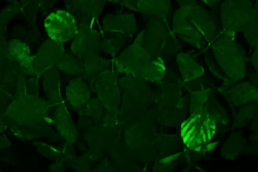
Fluorescent image of InnerSoy signaling Cercospora leaf blight.
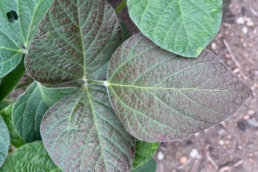
Symptoms appeared about a week later in many fields; earlier than typical for this region
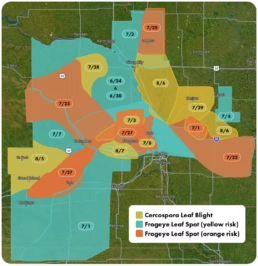
Several Disease Alerts called for Frogeye Leaf Spot
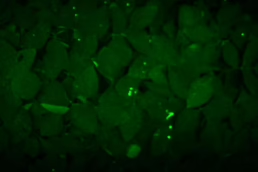
Fluorescent image of InnerSoy signaling frogeye leaf spot.
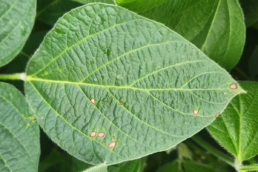
Frogeye leaf spot symptoms appeared days to weeks later.
Disease Report
– Photo from plots –
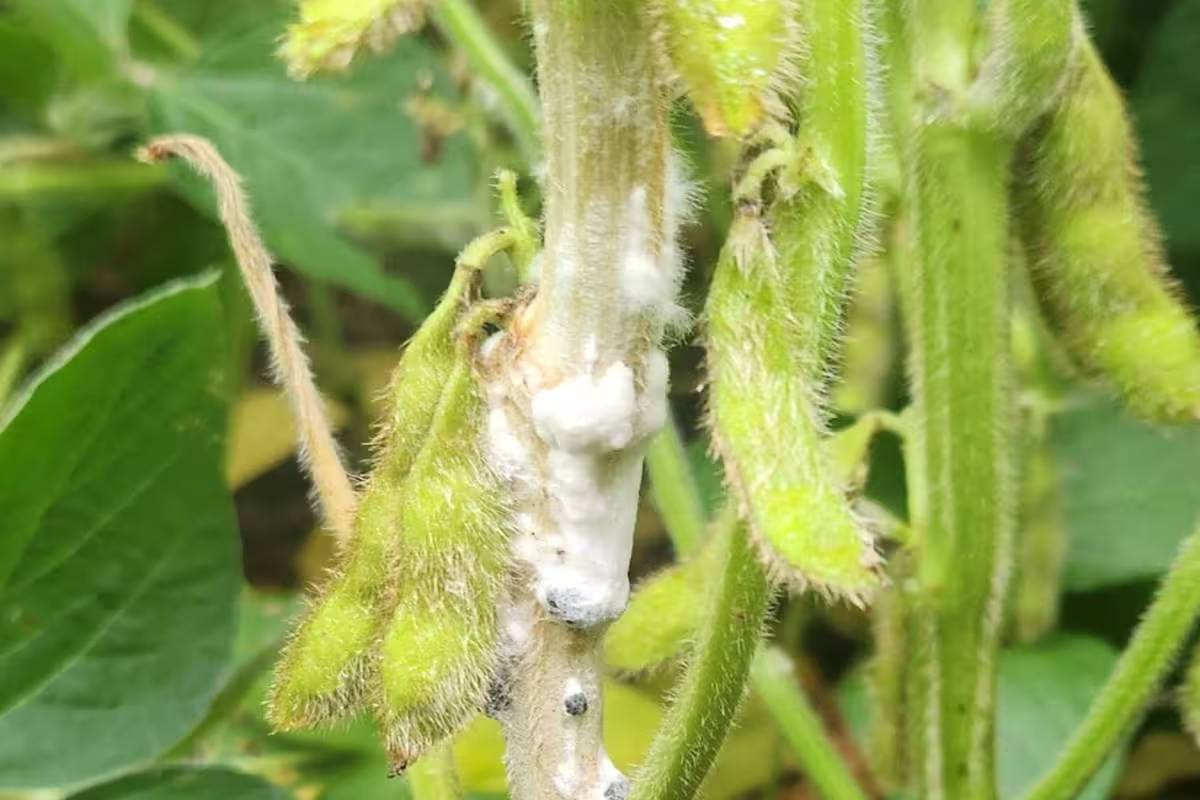
– Disease –
White Mold
– Detection Status –
No Disease Alert
(Very low incidence in highly susceptible varieties; across network only handful of symptomatic plants found)
– Incidence (%) –
0.1
– Severity (%) –
1.8
– Photo from plots –
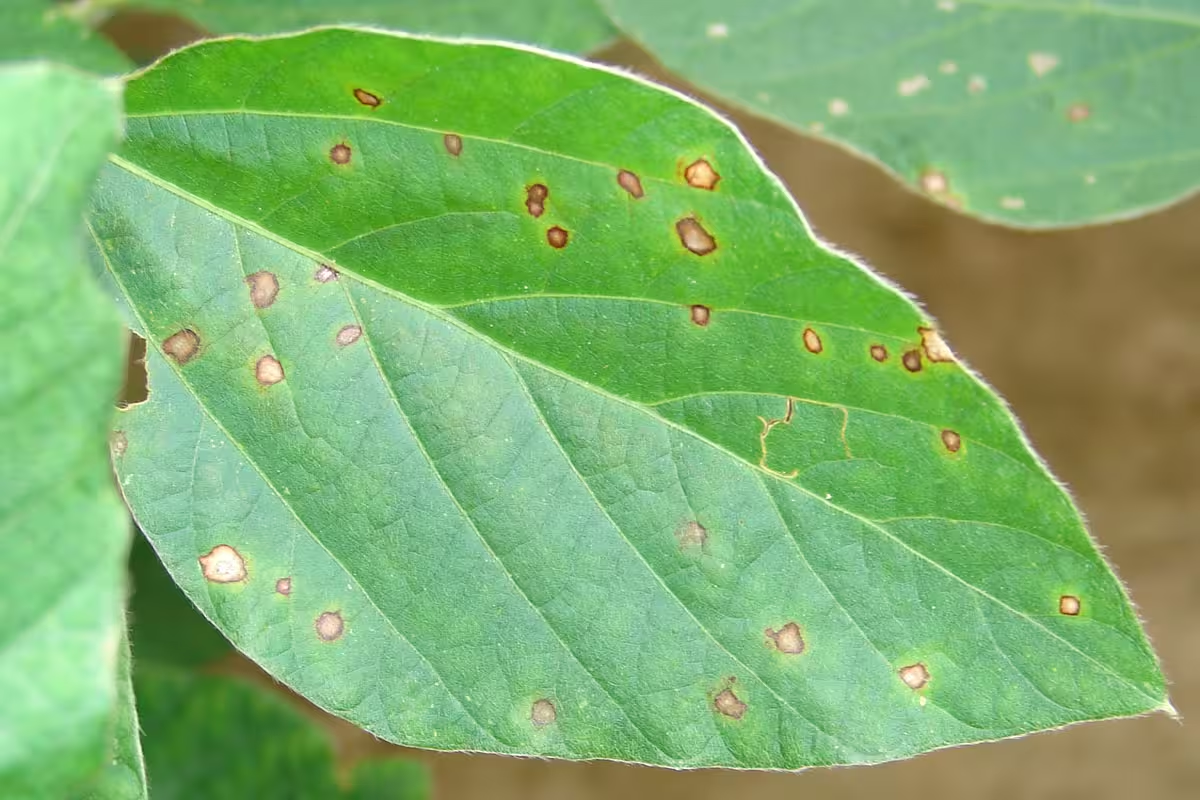
– Disease –
Frogeye Leaf Spot
– Detection Status –
Yellow and Orange Disease Alerts called based on InnerSoy signal as early as 7/1
– Incidence (%) –
3.9
– Severity (%) –
0.9
– Photo from plots –
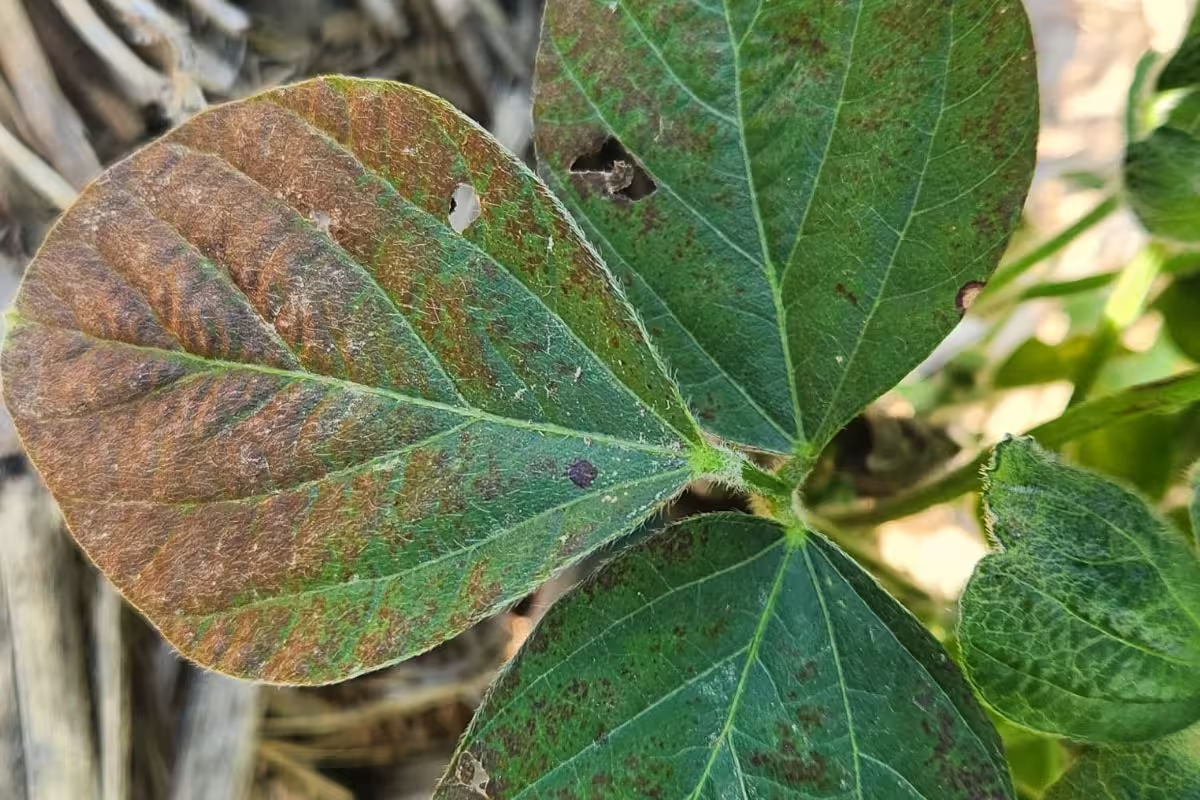
– Disease –
Cercospora Leaf Blight
– Detection Status –
Yellow Disease Alerts called as early as 6/24 based on InnerSoy signal
(Pathogen continued to be present throughout season, though limited foliar symptoms at end of season)
– Incidence (%) –
0.1
– Severity (%) –
0.1
– Photo from plots –
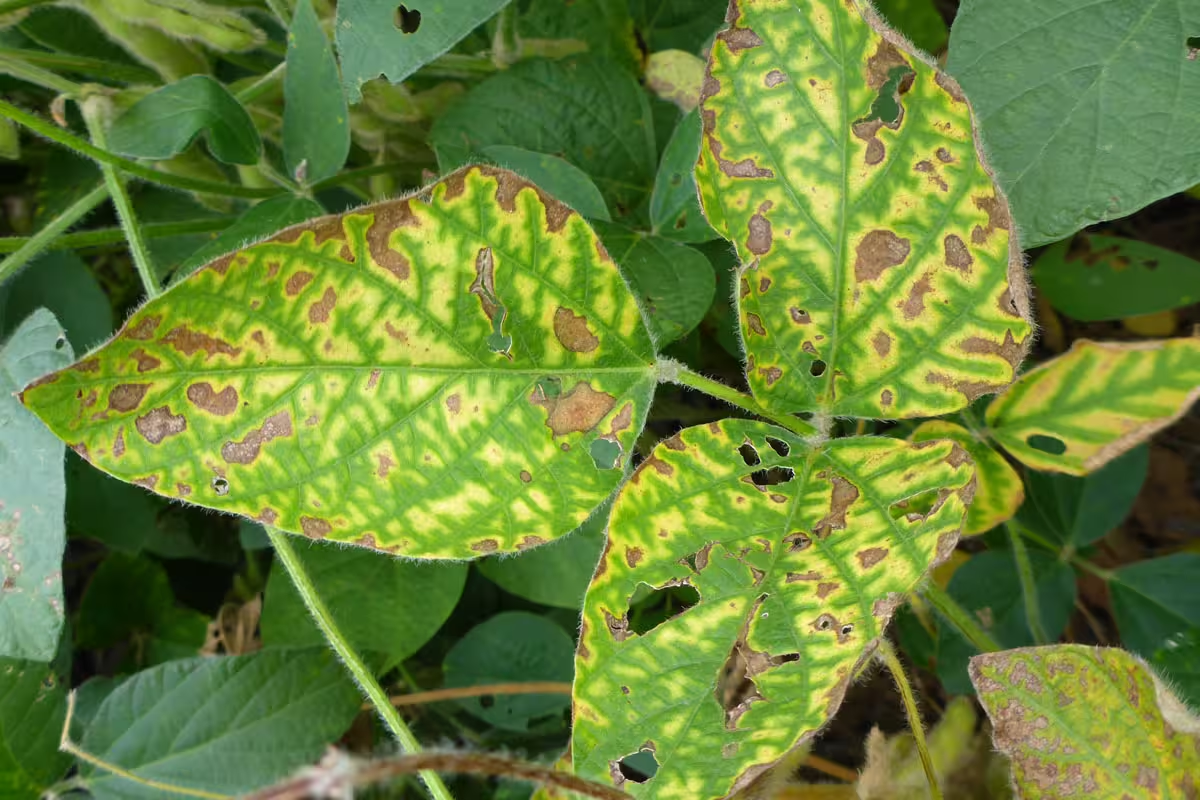
– Disease –
Sudden Death Syndrome
– Detection Status –
No Disease Alert
(Not treatable in season)
– Incidence (%) –
2.0
– Severity (%) –
6.4
– Photo from plots –
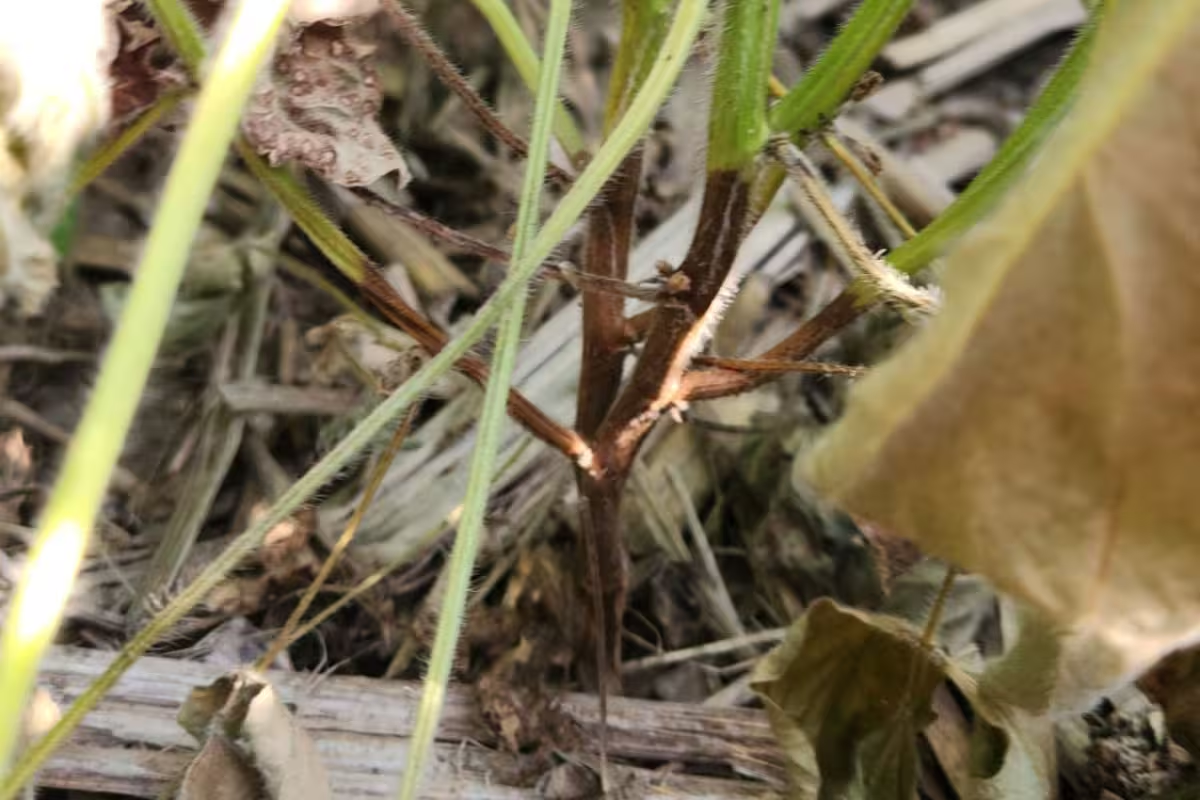
– Disease –
Phytophthora Root Rot
– Detection Status –
No Disease Alert
(Not treatable in season)
– Incidence (%) –
0.1
– Severity (%) –
3.0
– Photo from plots –
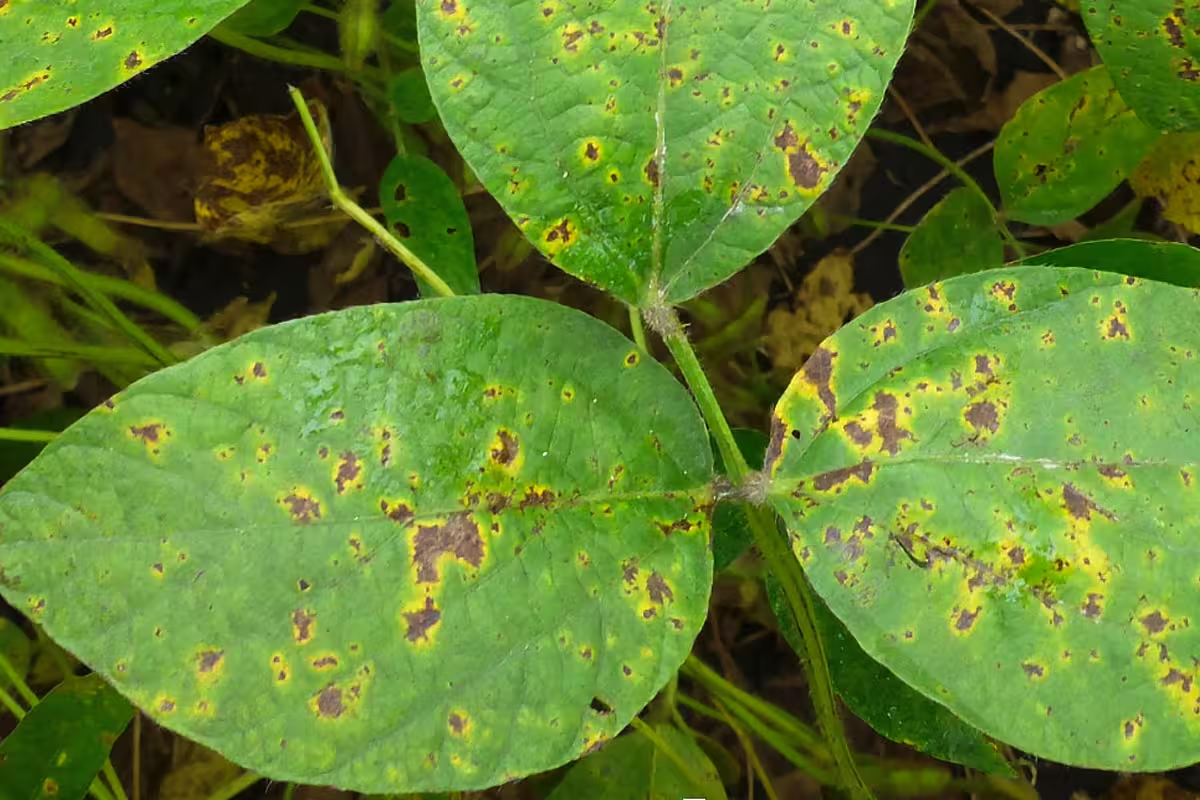
– Disease –
Septoria Brown Spot
– Detection Status –
No Disease Alert
(Not treatable by fungicide and little to no yield impact)
– Incidence (%) –
1.9
– Severity (%) –
1.5
– Photo from plots –
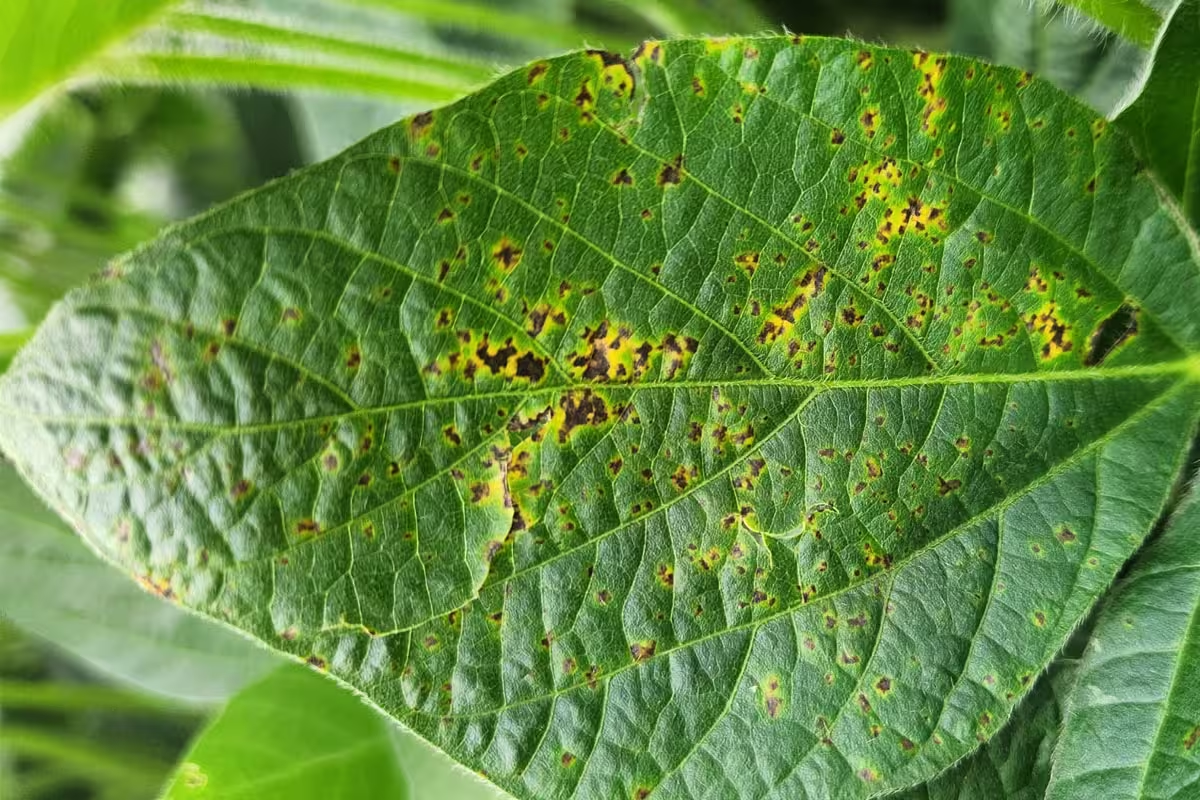
– Disease –
Bacterial Blight
– Detection Status –
No Disease Alert
(Not treatable by fungicide and little to no yield impact)
– Incidence (%) –
0.9
– Severity (%) –
1.6
– Photo from plots –
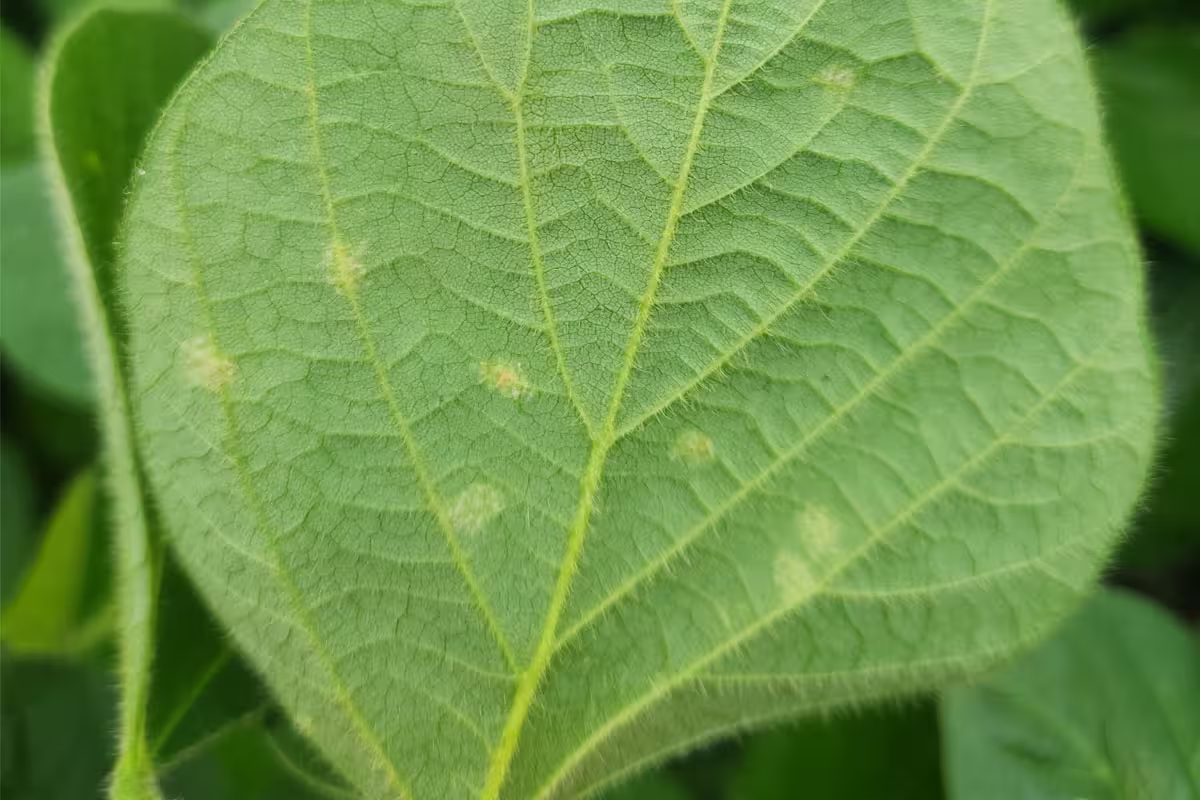
– Disease –
Downy Mildew
– Detection Status –
No Disease Alert
(Not treatable by fungicide and little to no yield impact)
– Incidence (%) –
1.3
– Severity (%) –
0.7
Insect Update
Minimal insect damage was detected. Japanese beetle feeding was noted as early as July 10, but none of the fields scouted reached the threshold of treatment, which is 20% defoliation during the soybean reproductive stages.
Dectes stem borer adult beetles were observed in late June, and larvae were found in July through cutting branches and stems of plants that showed symptoms of wilting and dying. When the larvae infest stems and branches, the results can be confused with sudden death syndrome.
Soybean gall midge was detected in late-July in a few plants. Plants infected with soybean gall midge show symptoms by wilting or dying. If you look closely at the base of those plants, you can spot the characteristic larvae that look like maggots in either a white or orange color. Initially discovered in the Midwest in 2018, there are not currently any recommended insecticide programs to treat.
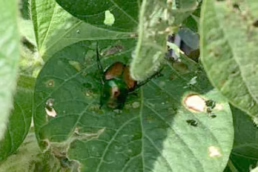
Japanese beetle feeding in season.
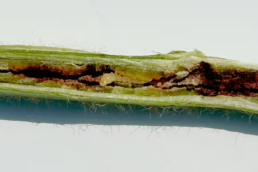
A Dectes stem borer larva found in a soybean branch.
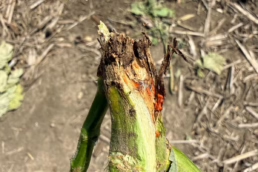
Gall midge larvae on the base of the darkened stem of a wilted plant look like white or orange maggots.
How disease was detected
CropVoice is powered by a network of InnerSoy plants genetically engineered to fluoresce when infected by above-ground fungal pathogens, giving early warning of disease. That information is augmented with laboratory analysis, on-the-ground scouting, local agronomic expertise, weather data, and advanced modeling. Disease Alerts are sent when disease is confirmed, often before symptoms are visible, to help farmers take control of disease in their fields.
Pathogen Presence
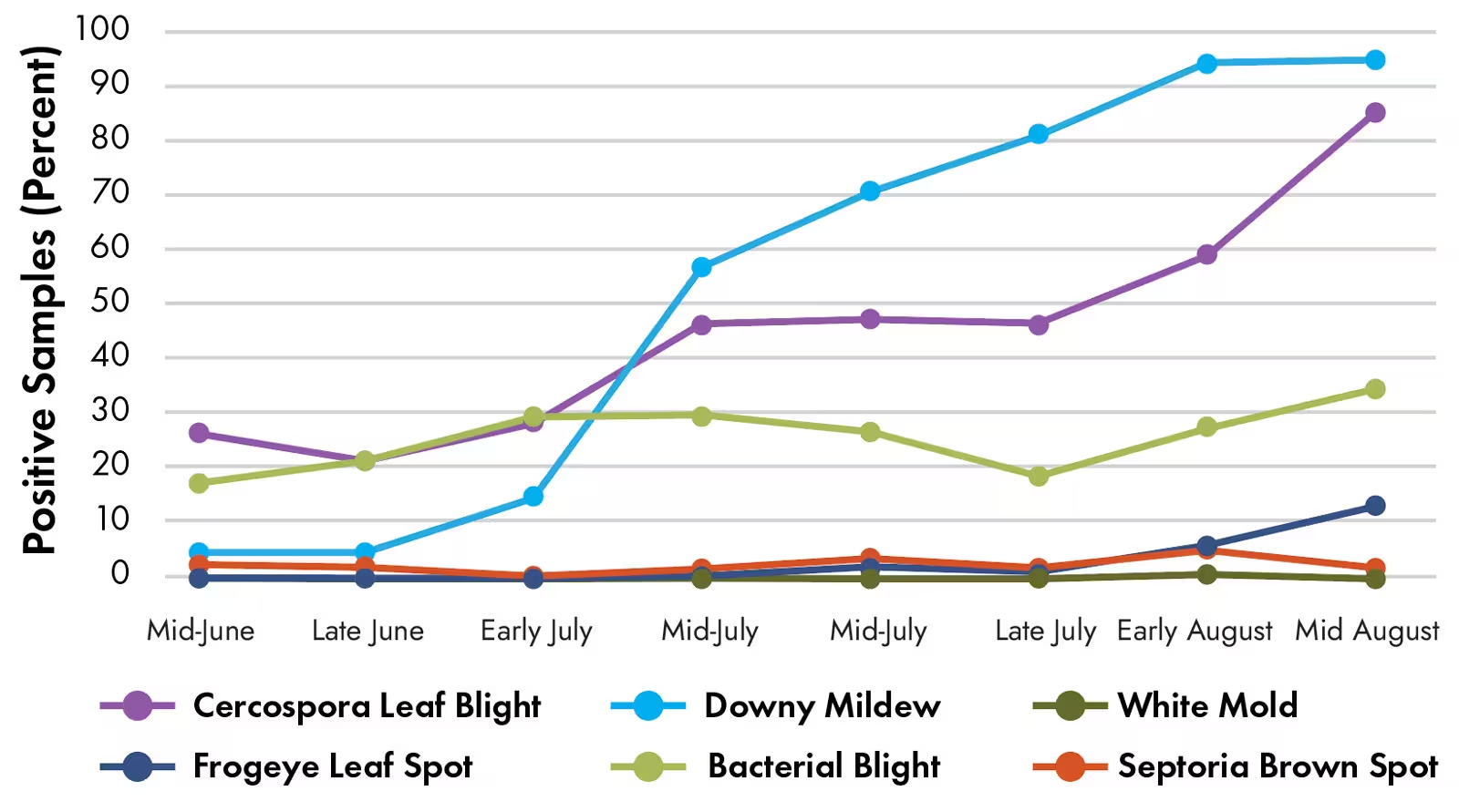
- Disease Alerts for Cercospora leaf blight were called as early as June 24th based on InnerSoy signal, and pathogen presence continued to increase throughout the rest of the season.
- Disease Alerts for frogeye leaf spot were called as early as July 1st based on the InnerSoy signal, and pathogen presence increased through late July and into August.
- Downy mildew and bacterial blight were common throughout the season, neither of which is a disease that is likely to cause yield loss (nor treatable by fungicide).
- White mold DNA was detected in early August at a single high pressure site in a susceptible variety.
This chart shows pathogen presence across the season, detected by proprietary molecular assays from tissue samples of soybean leaves collected weekly in the CropVoice network. The presence of a pathogen is necessary, but not sufficient, to cause disease; a susceptible host and favorable environment are also required.
Environmental Conditions Affecting Disease Risk
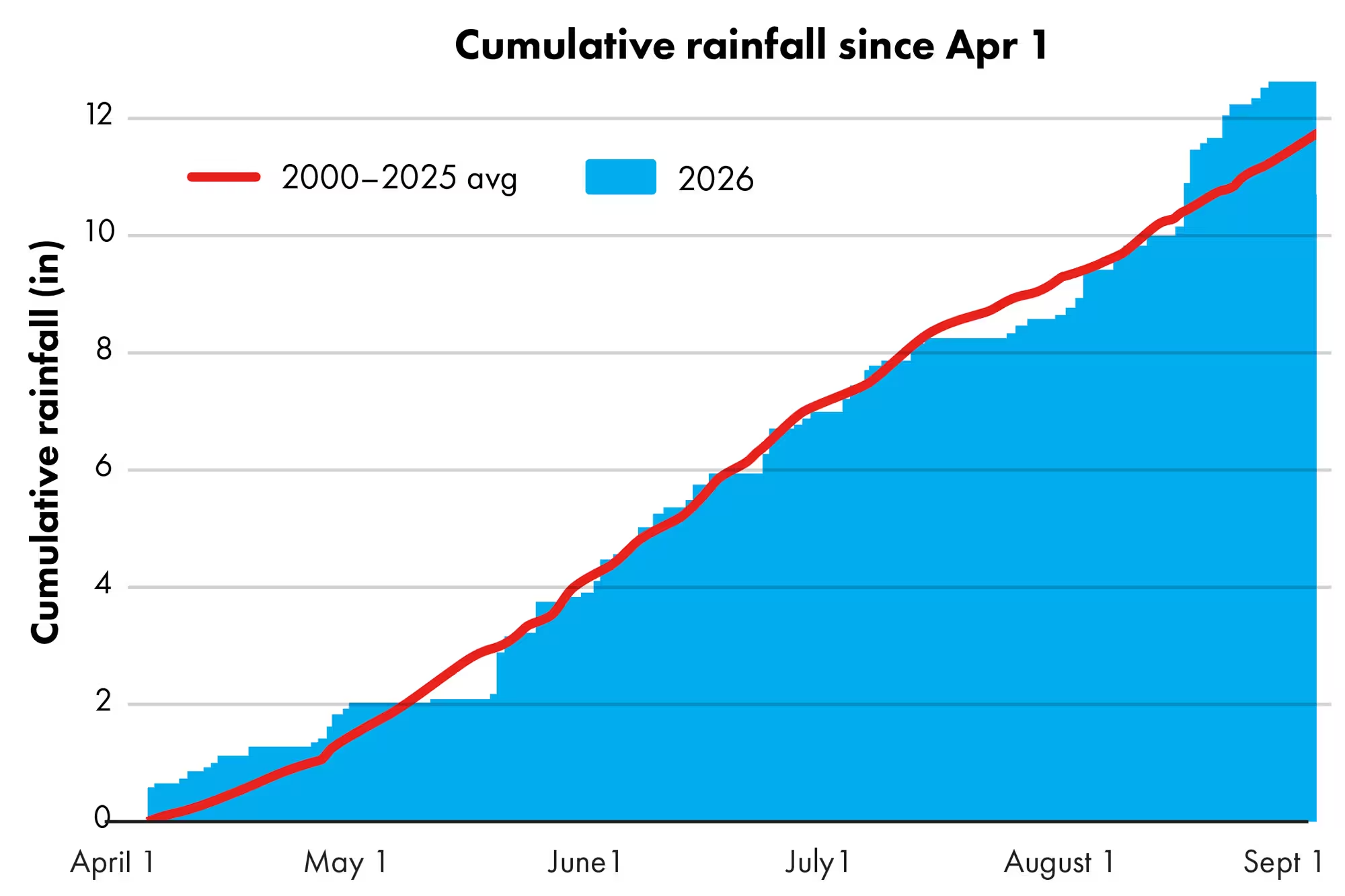
Precipitation has been variable in this area this season, with some pockets continually missing earlier rain. Fortunately, recent August rains should benefit soybean yields. A cooler than average June slowed canopy closure. The hot weather in July limited white mold susceptibility on dryland acres and transitioned into a seasonably warm August. Humidity for the season was higher than the historical average, with dewpoints running at least one or two degrees above average and an abnormally high number of leaf wetness hours. These humid conditions provided a conducive environment for Cercospora leaf blight (more typical for the mid-South), and frogeye leaf spot progression later in the season.
How to get ahead of disease for 2027
It’s not too early to get ahead of disease in future seasons.
While disease pressure for most foliar diseases in soybeans overall for 2026 was relatively low, there was late season build up of frogeye leaf spot in some fields, and many fields were impacted by sudden death syndrome (SDS). After scouting or looking at yield maps in your fields, note any disease pressure or hotspots for future soybean rotations.
Many fields that were planted with soybeans in 2025 will be rotating back into soybeans for 2027. Take a look back at disease pressure for those fields from previous soybean rotations, even as far back as 2023, which for many farmers was a particularly bad year for white mold, a pathogen that can survive in the soil for many years
If you experienced issues with these diseases, here are a few steps you can take this winter:
- Keep track of your field history. Note which fields, and where exactly in a field, you experienced high disease pressure. Many soybean diseases can persist in the soil for several years, so knowing exactly where the problem spots are can help you plan future rotations and management strategies.
- Talk to your retailer or agronomist about seed treatment options, particularly if you had issues with sudden death syndrome, soybean cyst nematode, phytophthora, or other root or seedling diseases.
- Talk to your seed dealer about disease resistance for frogeye leaf spot if you are planting soybeans into a field with previous disease history within the past 2 years. While frogeye leaf spot can survive in residue for 2 years, some varieties of soybean contain a gene(s) that makes the plant highly resistant to the frogeye leaf spot.
- Stay in control of disease with CropVoice in 2027. CropVoice provides the earliest disease detection and identification so you can decide if, when, and where to spray next season.

Call (618) 510-9177 to re-enroll in CropVoice for the 2027 season
For more information visit: InnerPlant.com/CropVoice